Campus
From Miracle Child to Illustrious Fellow
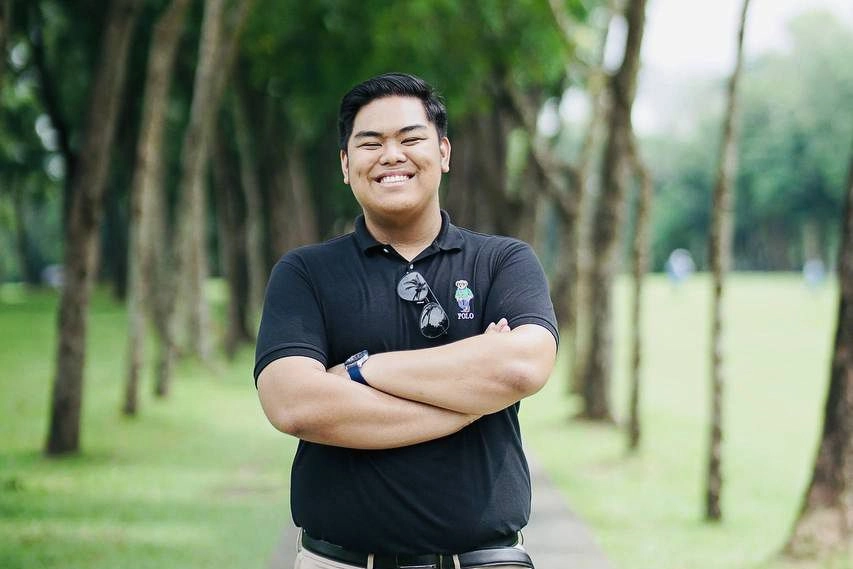
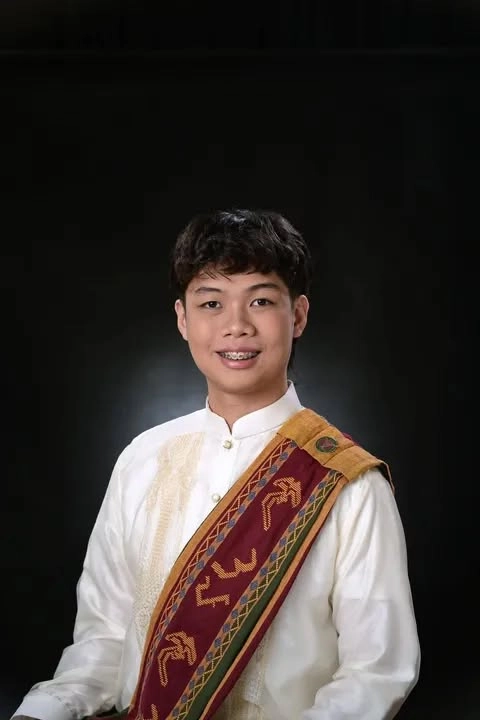
Before he became a fellow of the light, Luis Rellosa 2021 was staunchly anti-frat. “I was raised in an anti-frat environment, and fed anti-hazing sentiments from an early age, due to my parents' fear for my own safety, especially because I am an only child, and it took them 11 years of trying.”
He wasn’t exaggerating. His parents tried IVF, artificial insemination – the full scientific arsenal. Nothing worked. Then, in an act of desperation, they prayed to the Lady of Peñafrancia. Soon after, his mother was pregnant. “The funny part is, I was born on the feast day of Peñafrancia,” he adds. His mother was 35 and his father, 41, when they had him.
But his story did not end there. Luis would go on to become the Illustrious Fellow of the Upsilon Sigma Phi – Los Baños, a title that still surprises those who find out just how young he is. Because honestly, he doesn’t sound young. He sounds like your Tito who is an abogado, drinks only Islay from the whiskey motherland, and booms out words like “venerable” in a sentence. He even moves like someone out of time: equal parts big altar boy and seasoned statesman.
UP or Nothing
Before he became a Brod, he was not even sure he wanted to be in UP. “I dearly wanted to stay in DLSU for college. I went there for senior high school and thought I never wanted to leave. Honestly, I would have never left if the pandemic never happened. Our family business crashed like many others. Exports.”
Suddenly, La Salle’s tuition was no longer feasible. The order from home: UP or nothing. “Two hundred forty thousand a year is a joke compared to UP’s free tuition. Miraculously, I got in.”
So committed was he to avoiding fraternities that he even offered to sign La Salle’s non-fraternity contract, hoping it would secure his place there. He laughs now: “Yet here we are.”
Then came the nudges. His grand uncle, Florante Rellosa ‘56, and grand aunt, Rebecca Rellosa ‘59, began to subtly reach out. A family friend, Ray Orozco ‘65, was in business discussions with his mother when he learned that Luis had entered UP.
“He invited me through my mom and gave his personal guarantee that I would not be hurt. If anything happened, he promised to pull me out of the initiations himself.”
And yet, it wasn’t just the older generation pulling him in. “I ran as a councilor in the CAS SC, and my ninongs, Gio Olivar 2020 and AJ General 2020, who were also in the council, invited me. Seeing as I had nothing else to do during the pandemic, plus the invites from my grand uncle, the guarantee from Ray ‘65, and a desire for purpose, I accepted the invitation.”
That moment, he says, was the turning point: the day he stepped into a life he had never imagined for himself.
Jedi Mind Tricks, Slates, and Prom Night Vengeance
You'd be forgiven for thinking that Luis trained in debate. Or voice acting. Or mind control. The voice is that persuasive, the delivery measured, the turns of phrase almost too polished for someone barely out of his teens.
Luis had been trained early in leadership. “I was raised on ‘70s–'80s music. Traditional disciplinarian father with an affectionate mother. I was raised to lead.”
He served as an altar boy for eleven years, joined student councils at nearly every level, and learned how to lose with grace. “The only times I wasn’t in council were when I didn’t run—or when I lost to the same guy three years in a row,” he says, referring to his high school rival: the batch valedictorian.
“Every grade level’s ‘siga’ tropa were more sympathetic to me. I didn’t know it then, but I had a kind of campaign team hyping me up around campus. By His grace, and by a margin of no more than 20 votes out of a thousand, I won.”
Then came his most defiant act: prom.
The school administration, clinging to conservative fears, refused to allow the event out of fear that someone might get pregnant. “I’m unsure if they thought we were holding a prom or a massive orgy,” he deadpans.
He and his mother went around them. They organized their own prom at Palazzo Verde. The school scrambled to put together their own, held on the field, with not enough food.
“It was my last hurrah. I knew I had to get the hell out of there. True enough, after I left, I heard the SC advisor was badmouthing me, saying I didn’t do anything.”
He never looked back.
A Fraternity of the Light
Luis didn’t come in hot. “I didn’t hit the ground running. The fraternity was a whole new world. But the promise of brotherhood pulled me forward. Promises made, promises kept.”
What changed in him was internal: “Habits, perceptions, and work ethic. I had to grow. Even with the responsibilities, I kept up my grades. Leading by example matters.”
He found that his idea of leadership had matured. “There is always something bigger than myself. And there are people in this world beside my own parents who are willing to be genuine, to show true character without asking anything in return, except that same genuineness.”
The Weight of the Mantle
As Illustrious Fellow, he found himself suddenly responsible not just for campus logistics, but for legacy.
“For an undergraduate like me to help steer that ship is a weight I don’t take lightly.”
There were hard lessons. “Even your best intentions can backfire. If you act without hearing all sides, your judgment may fail you. Cooler heads prevail.”
But there were also moments that made it all worthwhile.
“When the Upsilon Student Assistance Program (USAP) was formally launched, I saw a combination of a personal advocacy manifesting into action—fellows of my chapter being provided different grants and scholarships in accordance to their need, theses being funded, assistance being rolled out. That was exactly one moment that made me stop and think: ‘This is why I do this.’”
His leadership style is unmistakably his own. “My parents raised me with both affection and autonomy. That’s how I lead. I trust the Brods to do what we believe is right. We’re in our positions for a reason.”
When asked who shaped him most, he speaks of the seniors who challenged him. “They got me out of my comfort zone. They showed me what it means to strive.”
And when things go sideways, who does he turn to? “My batchmates. Always. But in life? It’s my parents.”
A Leader, Still Becoming
Even now, he admits some people misunderstand him.
“They see someone confident, maybe privileged. But they don’t always see the struggles. The pressure. The sacrifices.”
He hopes his parents understand what he carries. “They know I’m in different cities, doing work for the frat. But they don’t see the hardest decisions. And that’s okay. I want them to know their son can stand on his own.”
And after all this?
“Never say never,” he says about possibly contributing to the nation. “To be a statesman is a high honor. Like now, it’s about trust.”
His measure of a legacy is simple:
“If someone I mentored exceeds what I’ve done, and I helped them with integrity and compassion, then I believe I would’ve left something lasting.”
About the Author
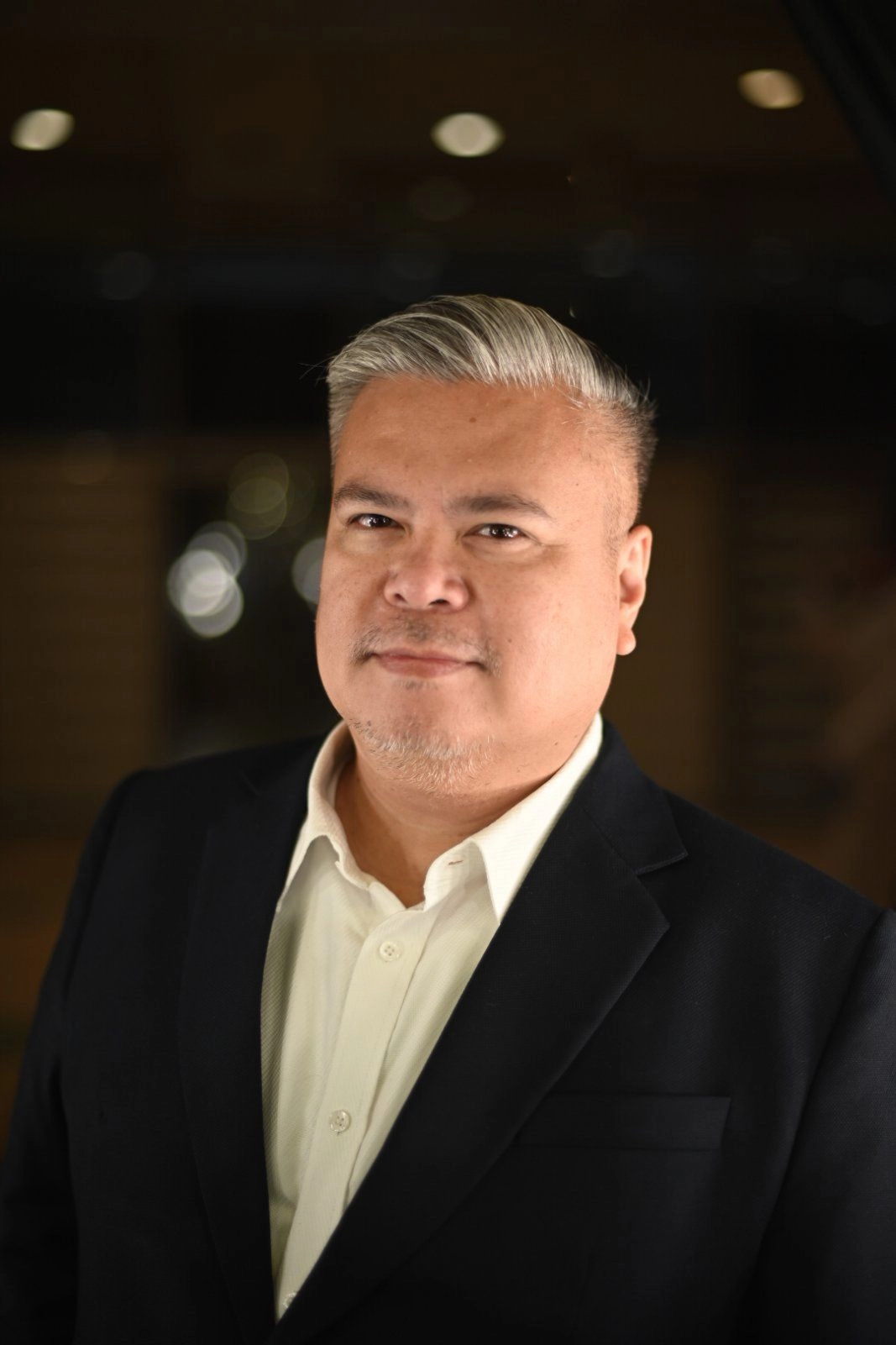
Javier P. Flores
A Juris Doctor from the University of the Philippines College of Law, he is a partner at the Flores & Ofrin Law Office, with expertise in corporation law, property, and litigation. Beyond the courtroom, Javi has made a name for himself as a publisher and editorial force. He is the co-owner of Milflores Publishing, a multi-awarded publishing house known for producing books that seek to elevate Filipino literature. He also founded League Magazine, a publication that spotlights the best governance practices of local leaders. Javi is also a two-time Master Photographer of the Camera Club of the Philippines. He was a former Associate Editor of the Philippine Collegian, the country’s oldest and longest-running student newspaper. Javi also served two terms on the Board of Editors for the Integrated Bar of the Philippines Law Journal.