Alumni
Barefoot Martin and a Fellowship under the Siargao Sun
When people think of Martin Andanar, they usually think of the version they have seen on TV: the suit, the newsroom, the public voice laced with gravitas, the man speaking with polish and certainty. For the longest time, he was one of those faces that seemed to belong to the screen itself. He had done major broadcasting work here and abroad, and later on, he even served as secretary of the Presidential Communications Office, steering Malacañang's message to the country and the rest of the world.
That is the Martin most people know. The Martin I got to know was carrying a surfboard in one hand and handing me a baby octopus with the other.
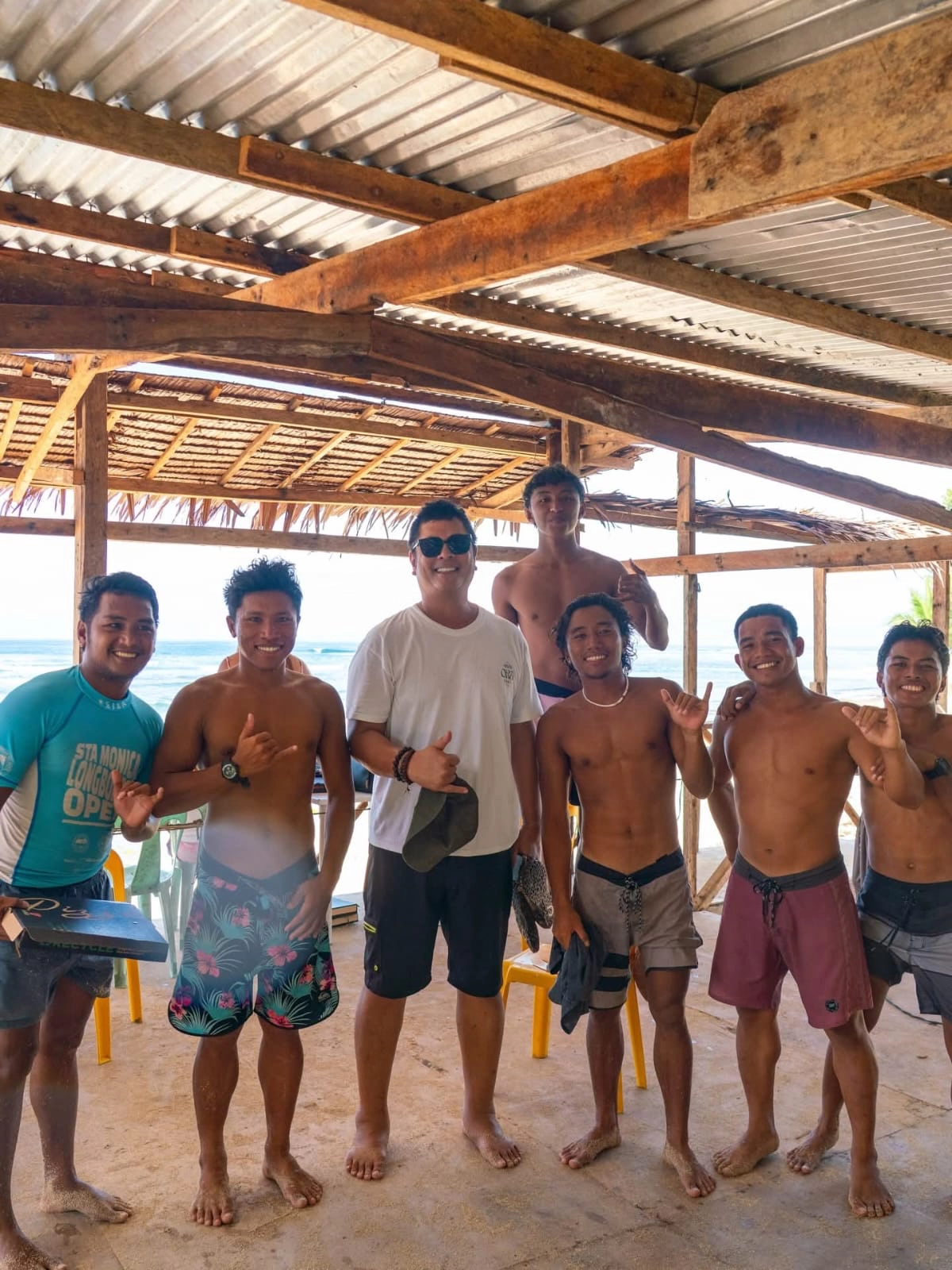
I joined Martin Marfori Andanar 2020 in Siargao last October 2025 as a volunteer for his latest passion project, Ora Kafé. At the time, I had just finished school and was considering taking a gap year before getting serious about work and postgraduate studies. He made a standing offer to brods who had the time and were willing to learn how to be a barista, or just join in on an adventure in Siargao. That sounded interesting enough to me. I did not expect much. I certainly did not expect that staying with Martin in the north of Siargao would completely change how I saw him.
He is a proud Siargaonon, and in Tangbo, Sapao, in the municipality of Santa Monica, that means something. Not in the abstract, not in the sentimental way people casually say they are “from somewhere,” but in the real way. He knows the people, the language, the habits, the food, the sea, the little workarounds that make life beautiful in a place that still feels far from the center of everything.
He told me that growing up there, electricity was sporadic. In the evenings, he studied by gas lamp. His grandfather, Wenceslao, had a rice mill installed at home, and people would come in the mornings to have their rice milled there. That same setup helped power their generator through the day. His father, Wency ’69, ran Coca-Cola deliveries with a truck plastered all over with Upsilon seals. That image stayed with me. Something about it made Martin make more sense: rooted, enterprising, a little colorful, unmistakably from somewhere.
Tangbo itself feels like the kind of place that strips life down to basics. In the day, there is mostly sun, waves, and long stretches of beach. At night, there is darkness, stars, and the feeling that the rest of the world is very far away. The cell signal is unreliable. The pace is slow, but not lazy. People still fish, still cook what is available, still move according to weather and tide.
Living there with Martin, I felt like I was seeing the non-TV version of him. Or maybe the older version. The more original one.
Our days there had a simple rhythm to them: surf, cook, open the café, talk to whoever showed up, close shop, eat, repeat.
One morning at around seven-thirty, Martin and I paddled out toward the surfline, caught a few good waves, and came back to shore just as some fishermen had docked on the beach. Martin, being local, went straight up to them and started speaking in Surigaonon. He reached into one fisherman’s styrofoam box, pulled out a baby octopus, tossed it to me, and said, “Lunch natin yan, brod.”
There we were, each holding ten-foot boards in one hand and an octopus in the other. That was the point where I realized this was not going to be some curated island experience. This was real life there.
Food in that part of Mindanao is something a city boy like me did not immediately understand. There is sili in everything. Some of the fish being served do not even have names I know in English. Some of the dishes are the kind you would never order in Manila, only because you would never even think of them. But once you are there, sweating, surfing, hungry, and eating what the place gives you, it starts to make perfect sense.
That day, we made adobo out of the baby octopus, but it was nothing like the adobong pusit I was used to. This one had local chilies, tomatoes, and very little soy sauce. It tasted sharper, cleaner, fiercer. On other days, there would be kinilaw, grilled fish, paksiw, and rice always. My only contribution most of the time was an omelette, which felt almost funny beside everything else that kept appearing on the table.
At first, I joked about how often we were eating fish. “Ano nanaman to, brod? Isda nanaman?” But after a while, I stopped complaining. After surfing and working all day, and only really eating at around eleven in the morning and six in the evening, I found myself hungry in a way that made all that food feel earned. It was also good food–not “healthy” in the sterile city way, but clean, fresh, and very far from processed. No nonsense. Just what the sea and the kitchen could do.
Every October in Sapao, they hold a festival where the town slaughters a Philippine carabao and sells the meat so families can feast. Martin was no stranger to that custom. He bought the tenderloin for around 550 pesos per kilo and called it a day. Back at the house, we cooked it the way his lola used to: bas-oy, a stew with the tenderloin, blood, whole peppers, lemongrass, green onions, and whatever root vegetables were around. That was paired with daing, rice, and the ever-present suka sa niyog with sili. Another day, we made pares out of the leftover lomo–garlic rice, kalabaw na pares, fried egg, and leftover bas-oy on the side. Proper surfer food.
That was another thing I came to understand about Martin. A lot of what he was building in Siargao was not just business. It was bringing old tastes, old habits, and a certain island sensibility into a new form.
He also brought me to see where Florentino Das, the Filipino Sinbad, landed after crossing the Pacific from Hawaii. Standing there, that story did not feel distant or folkloric. It felt like the island made those kinds of lives possible: people who leave, go far, and still find some way to circle back.
At night, if we were not too tired, we would head next door to a KTV place called Jammers, share Red Horse with the locals, and sing Pinoy classics. Those nights did a lot for the soul, especially after long days outside.
But the center of everything was Ora Kafé.
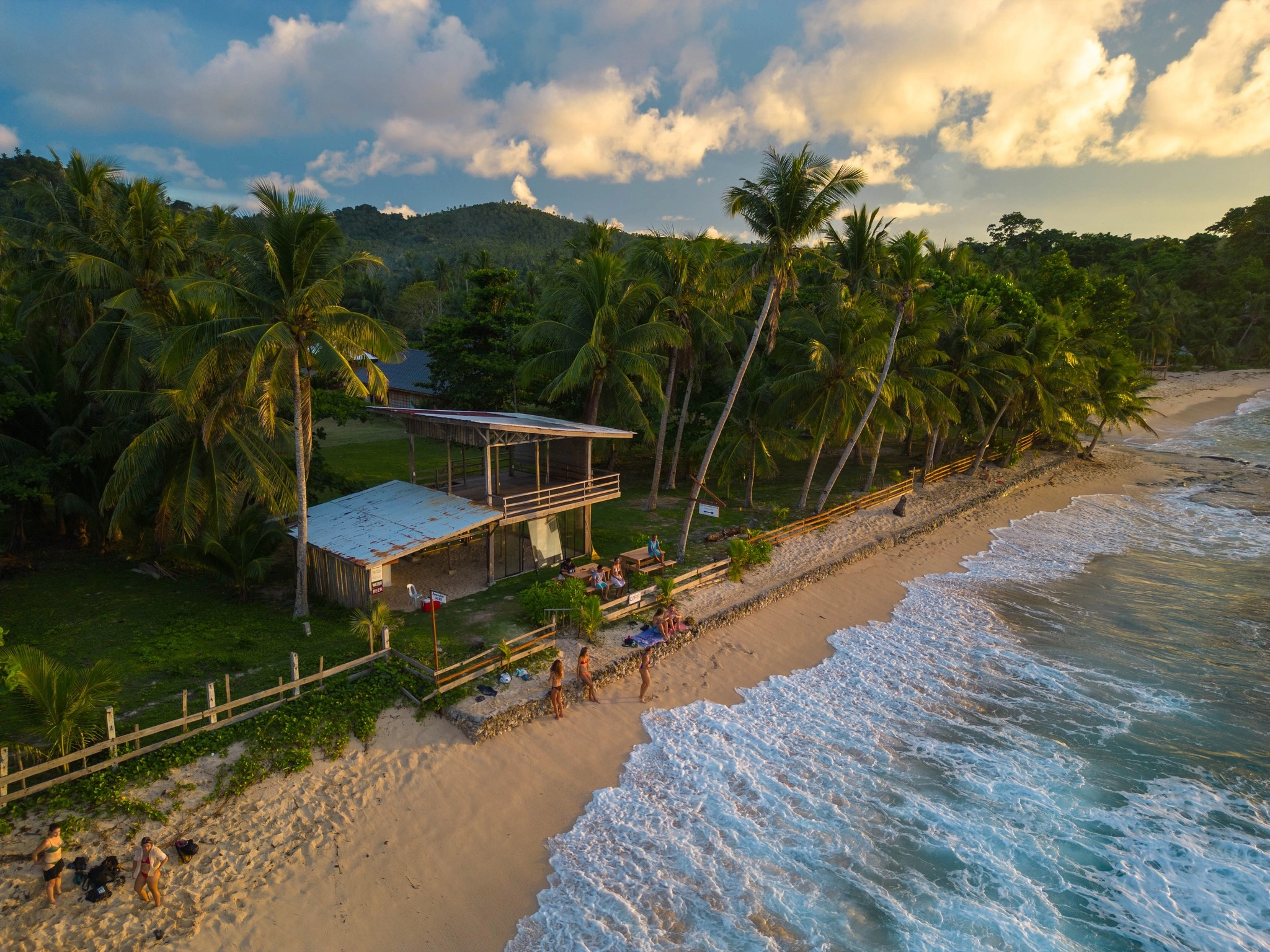
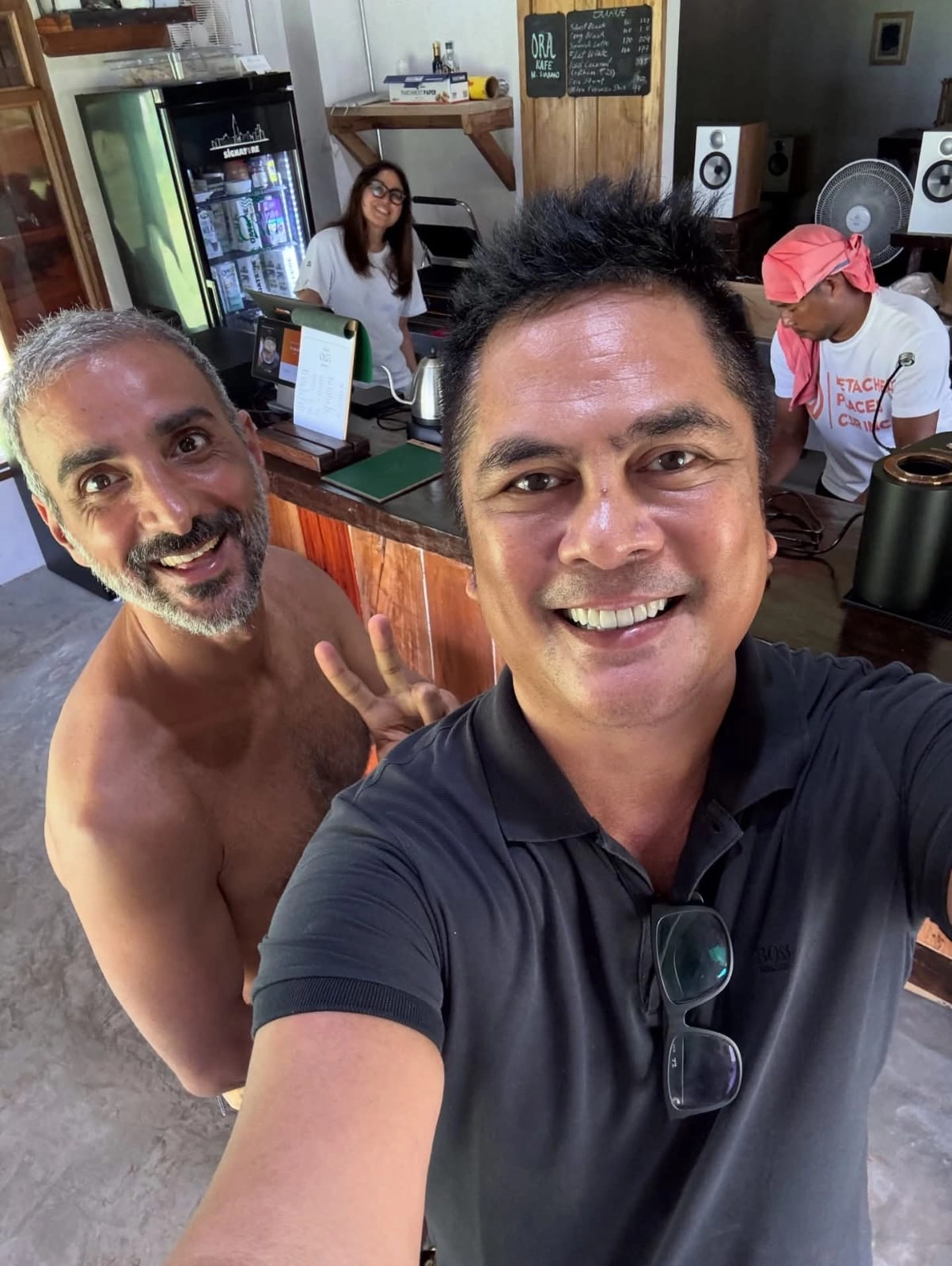
Opening a beachfront café sounds romantic until you realize the sea spray and salty air are trying to destroy everything you own. You have to be careful with the machines, with the electronics, with pretty much anything metal. Still, Martin built it anyway. And he built it well. Ora had this rustic, easygoing feel to it, but it was also properly equipped: Rocket Milano Cinquantotto, Starlink, Bowers & Wilkins, good bread, good coffee, good sound. It was clearly inspired by Australian café culture, but it did not feel artificially transplanted. It still felt like Siargao. Or at least Martin’s version of Siargao.
During the soft opening, we were serving iced long blacks, espresso shots, toasties, overnight oats, and the Ora Special, which was iced coconut water with a splash of coconut milk and an espresso shot on top. On the side, we would play around with drinks, try odd combinations, hand out sourdough pandesal for free, and basically use the whole thing as an excuse to talk to people.
One afternoon, while I was hanging around the café on the day we had decided to really open, Martin told me to go out there and make friends.
That was not exactly my strong suit.
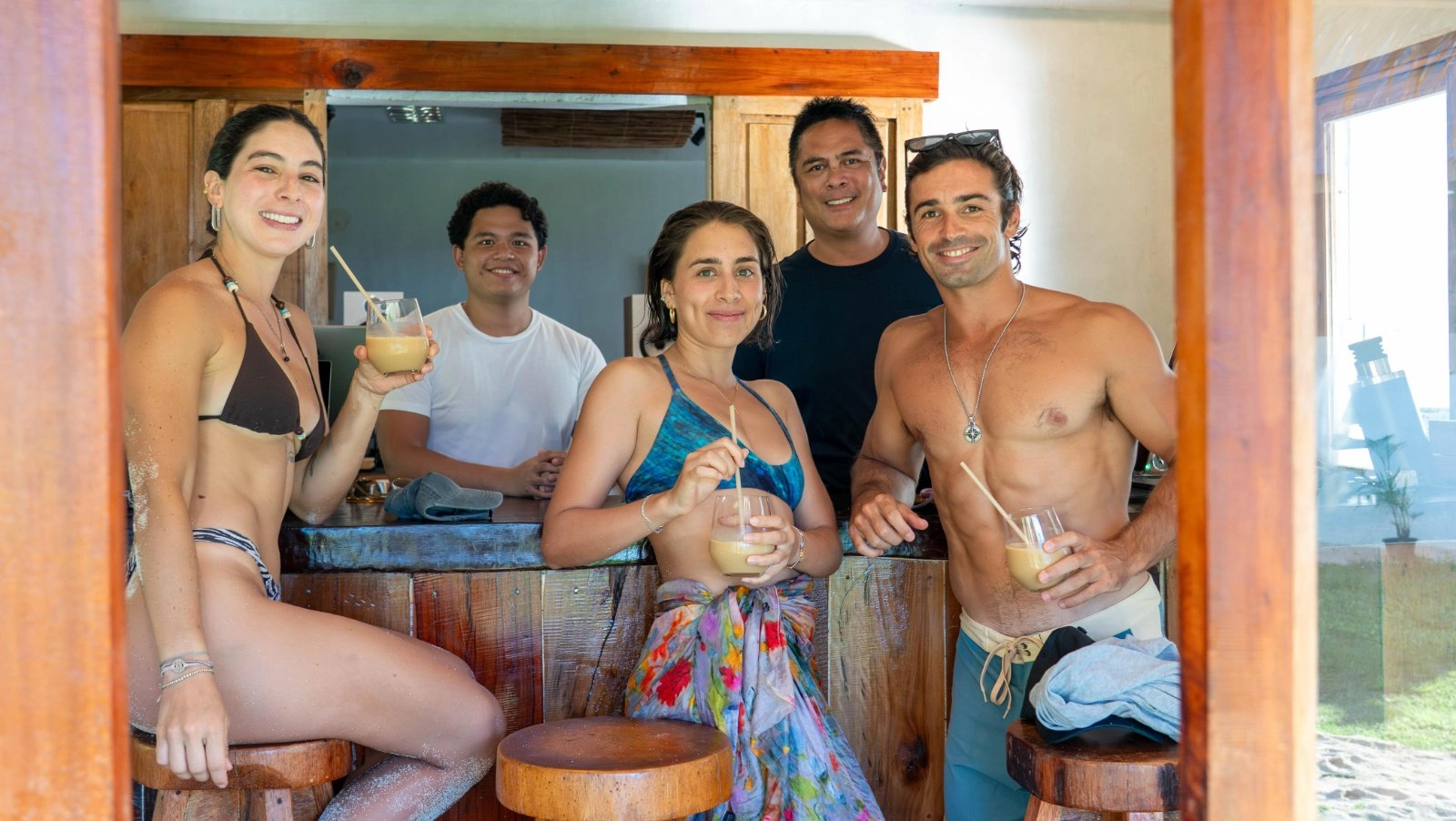
In my head, I was thinking: Who is even out there? The tide is low, the sun is brutal, and I am not some natural-born salesman. But I went anyway. I spotted this threesome on the beach–two Latina girls and a Spaniard–resting by the shore. I paced around first, thinking of what to say, because they were literally the only people there and also some of the most beautiful people I had ever seen. I finally said something awkward about the waves and mentioned that we had just opened a café nearby.
The word coffee did the rest.
They got up and came with me.
As we walked back toward Ora, I remember signaling to Martin from a distance, like, brod, we have guests. I saw him spring up from his seat and get ready behind the machine. We all sat down, started talking, and somehow that little movement of people attracted more people. That was what the café felt like in the beginning. Not a grand launch. Just one conversation turning into another.
I also fondly remember one of our first paying customers, a woman who had stumbled in because she badly needed WiFi to send something for work. “Yeah, I’ll pay whatever,” she said. Martin smiled when he received the payment. Later, he told me it made him genuinely happy–that after years of dreaming up a café, there was finally some small proof of life, some small ROI, some sign that the thing was real and not just in his head.
After that, we were finally in business.
Every day, we get different characters drifting in from all over the world. My job, unofficially, was to invite them over whenever I met them surfing, then help out in front during sunset, sometimes selling beers, sometimes just making conversation. Everything felt organic. Nothing was forced. We would give them the spiel, let them try the coffee, chat a little, and, once in a while, hear them say, “This is the best coffee I’ve ever had,” which, of course, felt great.
Tangbo is far from General Luna, but that was part of the charm. Martin described it to me as “GL when it was 2005,” and I knew exactly what he meant. It still had that feeling of being open and undiscovered, or at least not overdetermined yet. The waves there are long and strong, with some smaller breaks ideal for longboards. There is a sandbar you can start paddling from, though the surfline itself is quite far out. Sunset was always my favorite time to surf there, when the tide was high, and the whole place softened a little.
The people I met there, both locals and tourists, were different too. Some had never even seen Manila. Most of our conversations were just about where they were from, what the waves were like, where they had been, and what they were doing next. If they caught a good one, they would throw up a shaka and yell some version of “It’s pumping out there, bai!” It was simple, friendly, and enough.
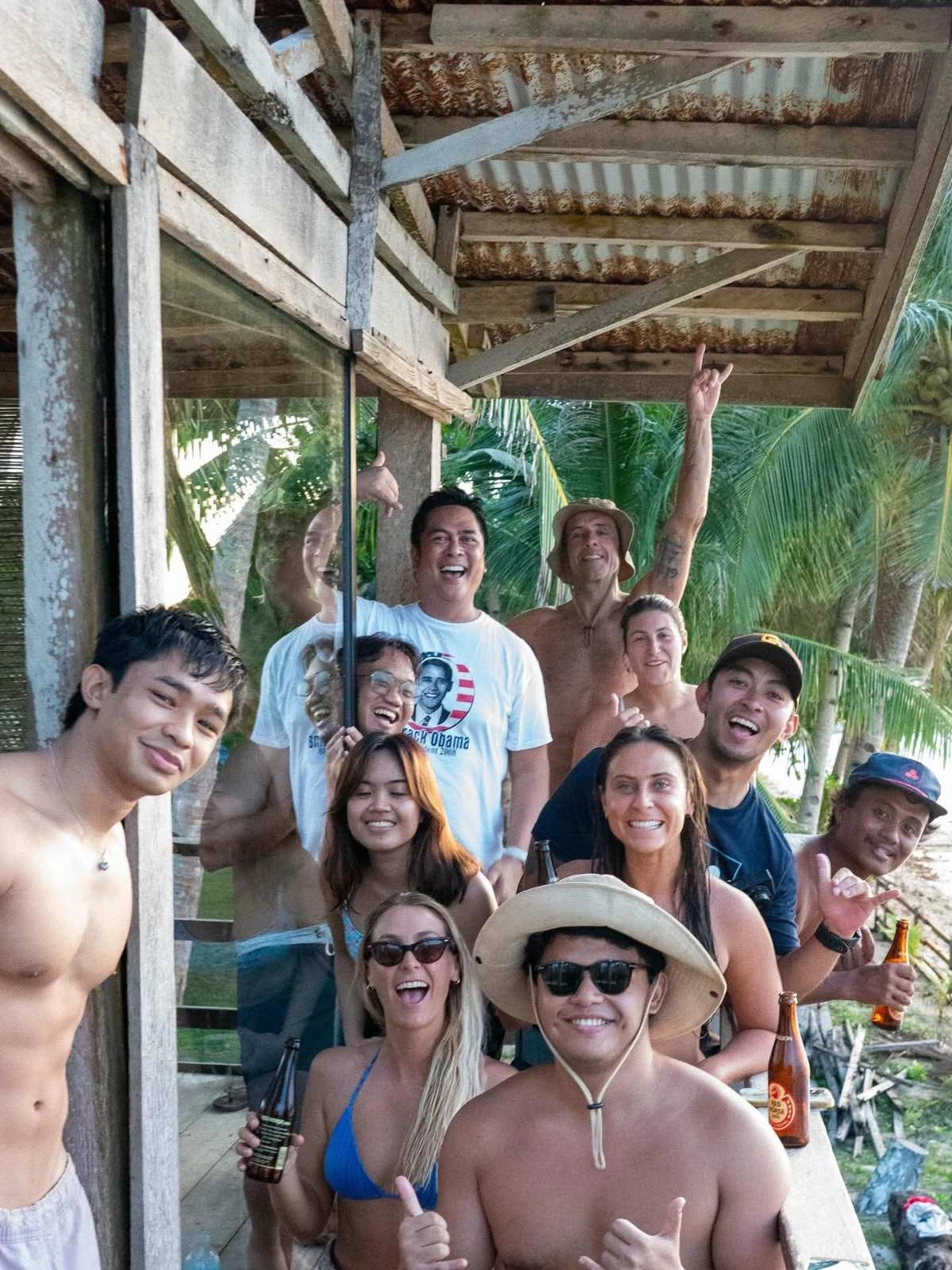
Some of them kept returning to the café for days. A few stayed long enough that by the time service was over and the light had gone, we were sharing dinner with them, too. In that way, Ora became more than a café. It became a kind of meeting point, a little station for all sorts of people washing up on that side of the island.
And through all of that, Martin made more sense to me.
Not because I had uncovered some hidden truth about him, but because I had finally seen him outside the frame most people place him in. In public, he is often read through his career, his titles, and his visibility. In Siargao, I saw the guy who knew how to talk to fishermen, who knew what to cook with what the sea gave him, who could build a café in a far-flung place and fill it with coffee, music, WiFi, memory, and conversation. I saw a man whose roots were not theoretical. They were still alive in how he lived.
That was what stayed with me most.
I went to Siargao thinking I was just joining a brod on an island project. What I got instead was a glimpse of who Martin is when the cameras are gone, when the suit is off, when the public version of him is nowhere to be seen. Out there in Tangbo, with surfboards on the sand, coffee brewing, fish on the table, and salt in the air, he did not seem like he was trying to reinvent himself.
He just seemed fully himself.
About the Author

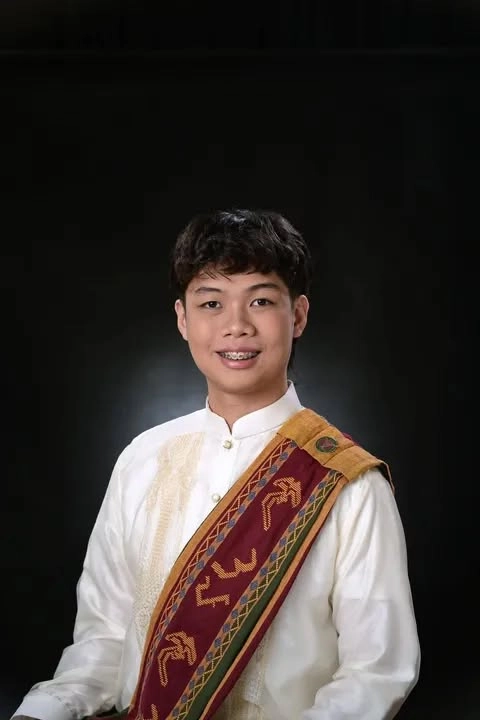
Nuel Liamzon-Sanchez
Nuel Liamzon Sanchez 2023 earned his bachelor’s degree in Interdisciplinary Studies, with a minor in Economics, from the Ateneo de Manila University. As an undergraduate, he was a member of the UAAP Judo Team, led organizations such as the Google Developer Student Club Loyola and RC Life Loyola, and worked part-time at Country Builders Bank (now Top Bank) as a loans associate. In 2022, he served as a researcher at the UP School of Engineering and co-authored a paper on circular economy and urban mining, which was published in academic forums and presented to UNIDO in Italy. After graduating, he joined Willie Fernandez ’69 at Concept and Information Group Inc., managing national-scale media operations for the 2024 midterm elections. He also led fundraisers for the resident body, including the Resident’s Cup, and served as overall Upsilon Month Head in 2024. Nuel, a nephew of Herman Liamzon Sanchez ’85, is currently applying to law schools and hopes to become an attorney.