Alumni
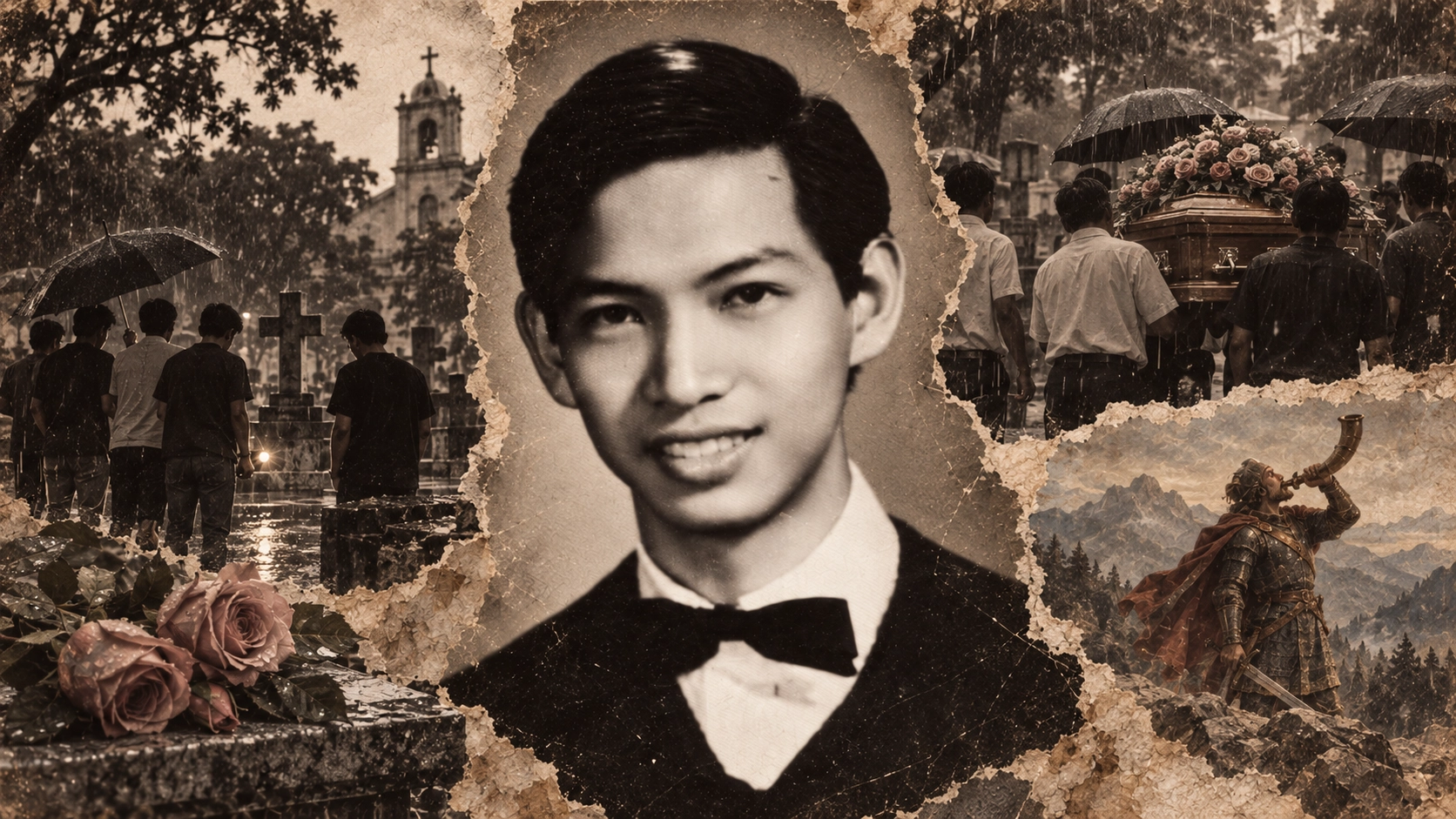
Remembering Chibu
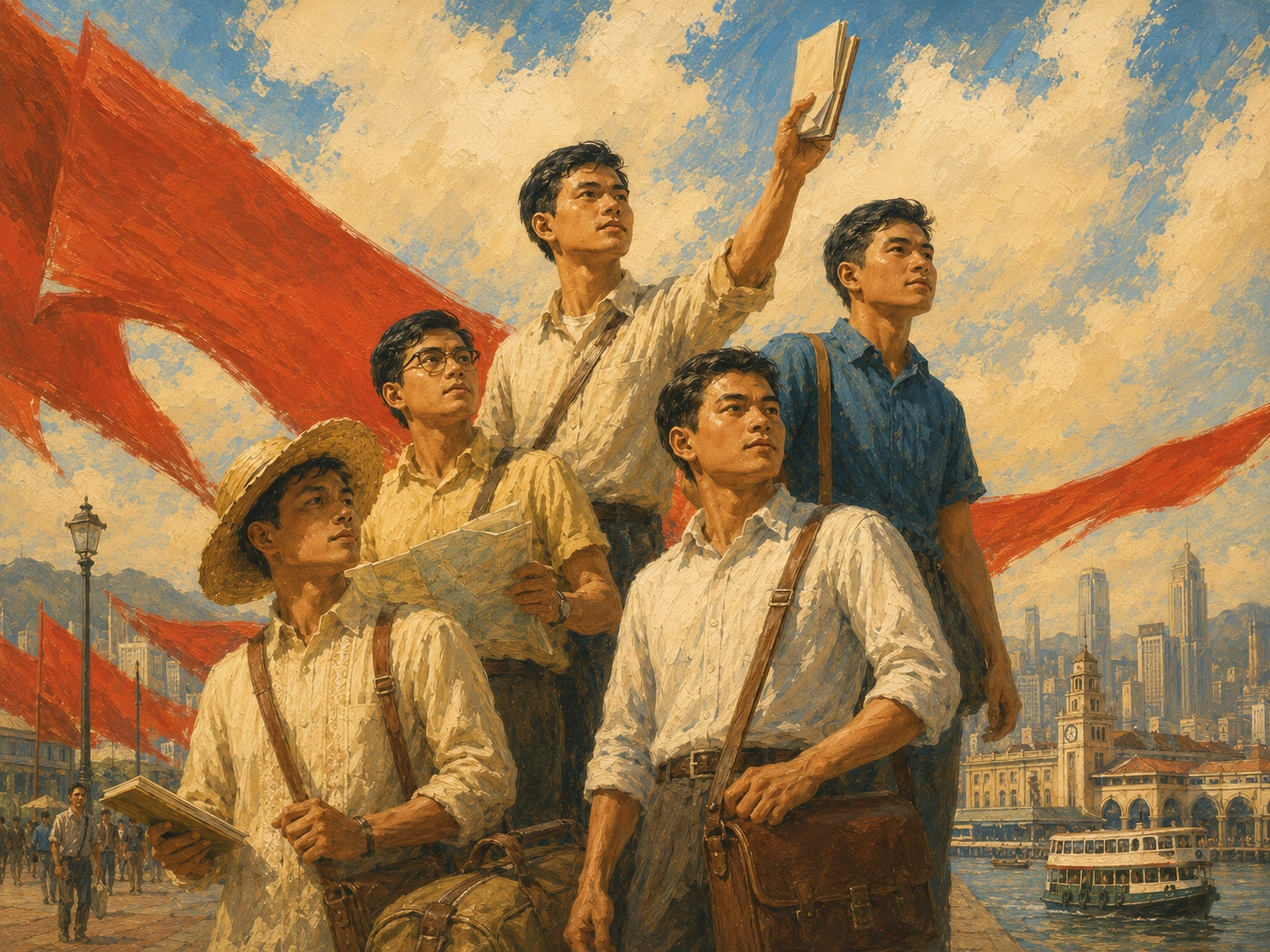
The first time I met Chibu, we were in a nondescript hotel on Austin Road in Hong Kong. I was part of a delegation of student leaders and faculty members who had been invited by the Shanghai Youth Association to witness the ongoing revolutionary movement in China known as the Great Proletariat Cultural Revolution. As arranged, after being flown to HK on separate individual tickets and schedules, we were to cross from the then-English colonial territory by train to various mainland cities. Naturally, we were assigned a group of translators so we would not miss one sweet minute of our cultural adventure.
Chibu, a year before, was stopped before he could venture into the Bamboo curtains, arrested, and brought back to the Philippines by Philippine consulate officers. At that time, and several years after that, travel to China (“Red” China at that) was verboten. It seemed the Philippine government was suspicious of Chinese propaganda, which might encourage the occasional Communist uprising. Our “cultural exchange” trip would likely be a “brain-washing” ploy, and our traveling group would somehow come back as “Manchurian” candidates ready to take arms against the Marcos regime. By 1967, President Marcos already had grandiose plans for a dictatorship, and if one were to believe Ninoy, Martial Law was around the corner. Of course, it was ironic that a few years later, Marcos would acknowledge China at the United Nations and establish diplomatic relations with it.
For the record, I was no student leader, and my sojourn was at my father’s suggestion (at the time, a number of his journalist buddies had returned to serve the country, and they were eager for my father to join them in serving the motherland; my father, who was busy running a seafood processing business, asked them to invite me as a substitute).
Chibu was our tour guide, familiar with the nooks and crannies of exotic Hong Kong. Together with some of his brods, Danny Gozo, Babes Alvarez, and I joined them for our outing. On our second day of the outing, right on Nathan Road in Kowloon, we witnessed the battle between unionists and the local constabulary – the melee of truncheon-bashing, stone-throwing, and a bit of bloodletting was like a movie before our eyes. We were safe behind the iron railings of the sidewalks, but were not spared the spatter of accidental blood on our shirts.
Our China trip lasted about a month, but shortly after school started, the three of us applied to become neophytes – so impressed we were with the bonhomie of the Upsilonians on our trip, especially with Chibu, who had a knack for storytelling and a fertile imagination. Really, how can one not want to be a Brod of Modesto “Chibu” Sapinosa Lagman ’63?
With such a colorful personality as Chibu, it was hard to resist those stories about him, which are now part of his mythology. During those crazy, somewhat rumble-prone resident days, Chibu was a kind of “ambassador” meeting with rival frat men to lower the war temperature, and succeeding too, like our Henry Kissinger. In those days, he was ever-present (may even be omnipresent) at the Basement with his duffel bag of unknown content. I was told it contained two precious items: a collection of E. E. Cummings poems and a hand grenade. (Later on, he admitted there was no hand grenade.)
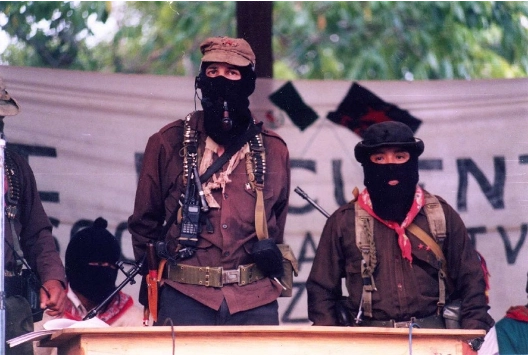
Life certainly provided Chibu with many opportunities for adventure. Like many of us exiles, he ended up in Edmonton, Canada. For a number of years, he taught Latin American history at various universities (before he retired, he was a faculty member of the University of Alberta, for example). He was a kind of “Indiana Jones” traveler. With his fluency in Spanish, he covered the span of the Americas – his favorite, of course, was Chiapas, Mexico, where he made the acquaintance of the Zapatistas, headed by Subcomandante Marcos (the organization calling for insurrection was the Zapatista Army of National Liberation, EZLN). (The group takes its name from Emiliano Zapata, the agrarian revolutionary and commander of the Liberation Army of the South during the Mexican Revolution, and sees itself as his ideological heir.)
For research, he followed the Chiapas conflict and visited the area when indigenous people were massacred by government forces in 1997. I remember his midnight phone calls when he would narrate the atrocities he witnessed. His mother passed away during one of those visits, and he was not able to return to the Philippines in a timely manner because of the insurgency. Over the phone, I had difficulty consoling him for his loss.
Over the years, he organized a few Latin American jaunts with several Viajeros Upsilonians, acting as their interpreter and guide. I missed out on these adventures but vicariously enjoyed them through twice-told tales.
When he transited through Vancouver on his way to the Philippines, where he maintained a condo, we would get together for wine and tall tales. I will miss his laughter and his extensive geographical knowledge.
Once, he asked me whether his name had a Chinese equivalent. At that time, he was practicing tai chi with a Chinese lady in an Edmonton community center. I said the closest I had for his “Chinese” name was “Chi-ku” (in Mandarin; in Cantonese, it was closer to ‘Chi-Fu’), which means:
Chīkǔ: 吃苦 - To Endure Hardship, To Suffer, To Bear Difficulties:
- Keywords: chiku, chī kǔ, 吃苦, endure hardship in Chinese, Chinese concept of suffering, work hard in Chinese, bear hardship, Chinese culture hard work, perseverance in Chinese, eat bitterness
- Summary: Discover the deep cultural meaning of 吃苦 (chī kǔ), a fundamental Chinese concept that literally translates to “eat bitterness.” This term goes beyond simple suffering; it represents the virtue of enduring hardship, persevering through difficulties, and making sacrifices in the present for a better future. Understanding 吃苦 is essential for anyone looking to grasp the Chinese work ethic, family values, and the cultural emphasis on resilience and delayed gratification.
In a sense, Chibu exudes “Chi-ku” having witnessed and lived a life of virtue, enduring hardship and perseverance – but not without a glint of “dare” in his eyes.
Farewell, Chibu.
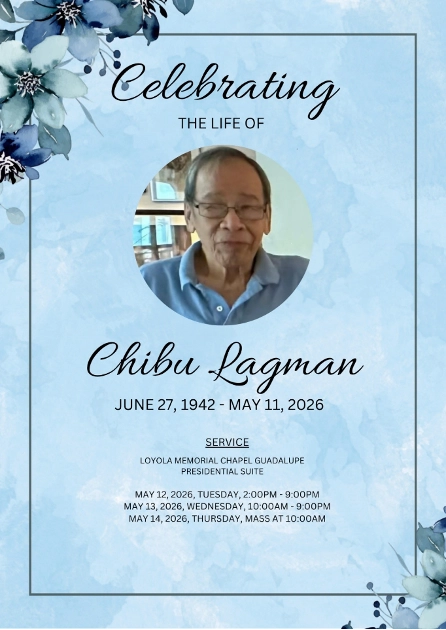
Below is a short article I “re-wrote” a while back – to remember him by…
A TALE OF TWO FRATERNITY BROTHERS
(CONDENSED VERSION)
By Chibu Lagman ‘63
(The original article appeared in Ninety Years of the Upsilon, a coffee table book published in 2008. Condensed by Alfie Kwong ’67, with permission from the author.
The Fraternity did not escape the curse of Martial Law. Given the wide variety of political persuasions, there was simply no way authoritarian rule could be well received by all its members. Even before the declaration of Martial Law, differing political positions were already evident within the Frat’s ranks. Individual brods in Diliman and Los Baños had already staked their political stance, but the Fraternity as a whole remained indifferent to these differences, preferring to maintain an agnostic forum.
Martial Law and the accompanying climate of intolerance made such a position difficult to maintain. The wide array of political persuasions jelled into distinct groupings. Clearly, there were brods who supported the regime just as there were those who opposed it. Over time, the initial two camps morphed into four distinct formations: pro-Marcos, anti-Marcos, and, within the anti-Marcos camp, pro-Ninoy and pro-Left.
Fraternal ties are stronger than political differences, and nothing illustrates that better than the bonding of Antony “Tony” Bayhon ’64 and Melito “Spooks” Glor ’67. As resident brods, the two shared the unfortunate fate of not endearing themselves to their ladies of choice. Thus, both spent a lot of time at Mrs. Gardner’s Blue Eagle drinking beer and seeking solace in the company of kindred spirits. Both had a reputation of being fearless, and this was proven time and again in rumbles with rival organizations.
Here, the commonality ends. Tony was the son of a military officer. He earned a degree in political science but was known to be apolitical. Spooks was the only child of a well-to-do family from Atimonan, Quezon. He was enrolled in the pre-med program at UP. But this did not prevent him from reading political texts and engaging in discussions with members of Kabataang Makabayan (the leftist group)who were the Frat’s neighbors in an apartment complex along Quezon Avenue.
By 1969, Spooks had become radicalized. A summer vacation back home completed the process, and before the year’s end, he had joined the New People’s Army. Tony, in the meantime, drifted from one job to another till Martial Law. He decided to follow in his father’s footsteps and signed up for the Armed Forces of the Philippines’ Other Officers Candidate course. This was quite a surprise to brods who recalled Tony’s love for crooning Bob Dylan songs. Still, he successfully completed the course and was commissioned a second lieutenant in the now-defunct Philippine Constabulary.
Both Tony and Spooks continued to frequent the company of brods, but separately. Each knew that the other had assumed opposite political stances. But respect for differences – political, religious, social, etc. – was so deeply ingrained in both that they did not consider each other as “the enemy.”
The late Vicar Rosales ’64, close to both, recognized how greater political forces separated two close brothers. Refusing to accept that political differences trumped fraternal ties, he arranged for a meeting between the two who had not seen each other for years. His fertile mind went beyond writing into a conspiracy to which I was recruited.
Without telling either Tony or Spooks, he informed both that brods would be drinking at the Country Chef, then a favorite watering hole of brods along Bohol Avenue. He reserved a private room, and he brought Tony there. Meantime, I kept Spooks busy at my place until I received the call from the Vicar to proceed to Country Chef.
It was a tense few seconds as Spooks arrived and saw Tony there. They approached each other: the guerrilla commander and the military officer, and then, with tears in their eyes, enveloped each other in a fraternal embrace that said everything. No explanation was needed. They separated for a moment, looked at each other, and hugged each other again as disbelief gave way to pure, unrestrained joy.
Beer was ordered; the time to catch up with each other’s lives began – no politics; then the kantiawan (teasing); more beer. When I meet you, Brother, in the Sun, I shall tell you much! But the magical night had to come to an end, and it was time to say goodbye. One final toast to the Frat; ingats; a final hug, and each disappeared into the dark night. We are one every time, everywhere…
Tony was assigned to Zamboanga and was killed when robbers entered his house sometime in 1969. Spooks was killed during an encounter with government forces in 1974. The NPA named its major military command after the legendary Kumander Tangkad.
How ironic that the rebel army would name two of its most important commands after two members of a fraternity reputed to be the most bourgeois in the University of the Philippines: the Melito Glor Command in Southern Luzon and the Medardo Arce Command in Mindanao.
How is it possible that mortal political enemies could be one in their loyalty to the same fraternity and to each other? Odd, but then this is the Upsilon Sigma Phi.
[1] The group takes its name from Emiliano Zapata, the agrarian revolutionary and commander of the Liberation Army of the South during the Mexican Revolution, and sees itself as his ideological heir.
About the Author
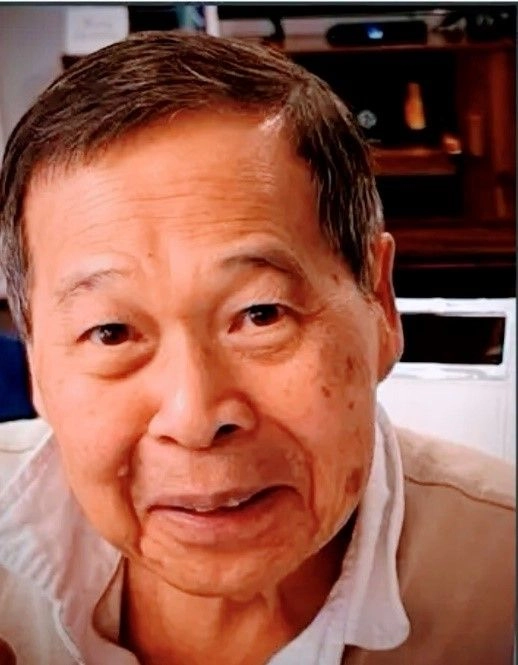
Alfie Kwong '67
Alfredo "Alfie" Chu Kwong '67, retired Chartered Accountant, has been residing in British Columbia, Canada since 1971. His recently published book (available in Amazon), Controlled Burn: Collection of Poems is in high demand among Brods and Sis. His essays have appeared in the Upsilon Anthology, Living the Credo, Traditions, Atin Ito News among others.