Alumni
The Life of Arjay Daen Gonzales 2014
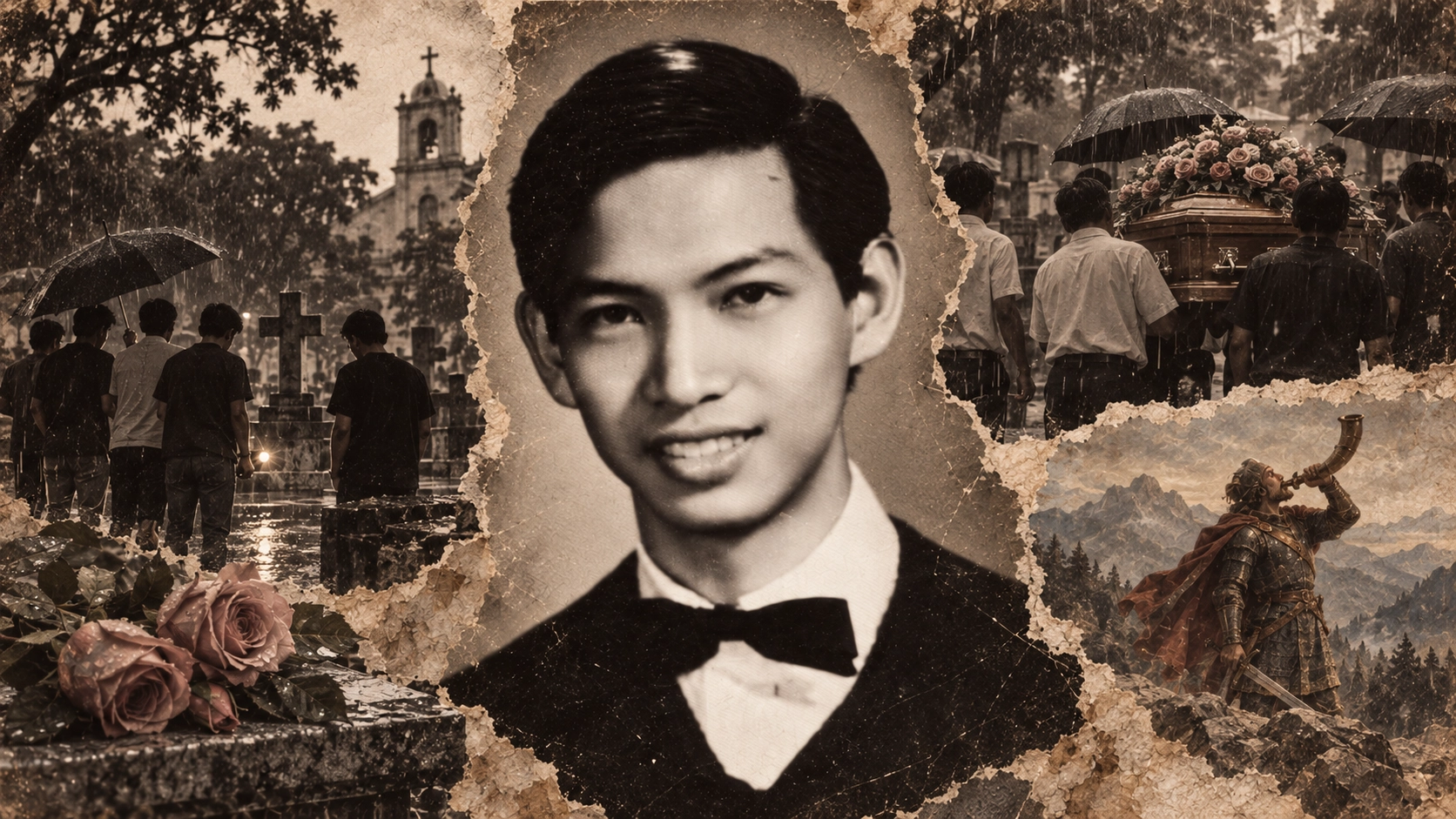
You reach the wake by passing through alleyways too narrow for cars, until you come to the bungalow where Arjay Gonzales 2014 grew up, and where he has now been brought home for the last time, lying still in a suit in a light blue coffin. His elder sister receives the guests as they arrive. His mother sits across him, inconsolable.
At the appointed hour, the final rites began. The Fellows had gathered in the open front space of the house, where Illustrious Fellow Aris Andrei Alejo Celicious ’18 presided. Above the assembled crowd, a fluorescent tube sputtered, died, and returned to life three times. Its light was hard and white, but never quite enough. It fell unevenly on the barongs, on the monobloc chairs, on the sweat darkening collars, and on the pauses between names as the roll of Fellows of 2014 began.
Fifty or so names were called one by one. Until finally came his: “Fellow Arjay Daen Gonzales 2014,” said the Fellow Recorder. Again, louder this time: “Fellow Arjay Daen Gonzales 2014.” And then louder still, as if calling for someone who has tarried: “Fellow Arjay Daen Gonzales 2014.”
At last, a batchmate answered: “I answer for him, for he is now fallen.”
For the next two hours, the Fellowship tried to do what the living have always done for their dead: recover, from memory and grief, in between sniffles and sobs and the occasional easy laugh, the outline of a young man’s life.
One by one, the Fellows rose to speak. Marx Lenin Navarro 2014, Arjay’s best friend and batchmate, spoke first. Arjay was often the one who got things started, he said. He was the reason Marx found his way into acting, and later into jujitsu, which Marx now teaches to children, things, he said, he might not have been doing if not for Arjay.
Even as a resident, Arjay had already taken on leading roles in theatrical productions. In 2017, he played Macario Sakay in a production written by Efren Yambot ’60 and directed by Alex Cortez ’67. Marx played the role of the main antagonist.
Hans Castro 2014 spoke of how Arjay always thought first of others, never of himself. He remembered how Arjay would ask how you were doing, and if you were not in a good place, he would be there to comfort you. Addressing the now absent Arjay, Hans said: “Andaming nandito para sa ’yo batch. Maraming salamat sa buhay mo.”
The twins, Ben and Andy Panga 2016, spoke next. Though Arjay was not the Senior Noble Fellow when they joined, he had adopted them, and so they called him “Nang” Arjay. Over time, what bound them was no longer just the formal tie of fraternity, but something closer to real brotherhood. They recalled that Arjay had once been offered the position of Illustrious Fellow, but turned it down, saying: “Brod, kung pagiging bossman ang dahilan para mawalan ako ng time sa nanay ko, hindi na lang. Marami namang ibang brods na magagaling.”
Eric Carlos “Caloy” Panga Jr. 2016 knew Arjay first in the old fraternity way: by being around him, by seeing him often enough to understand the sort of man he was. The first thing Caloy noticed was the smile. Arjay always seemed to be smiling, in the disarming manner of someone genuinely glad to find himself in your company. In those early years, what stood out was not intensity or swagger but enthusiasm, an almost tireless appetite for togetherness. Any kind of fellowship would do. He wanted the brods around him. He wanted the room full. He wanted the night extended by one more game, one more bottle, one more story, one more reason not to go home yet.
Raphael “Rap” Abragan 2017 spoke too, and what surfaced was regret, the kind that follows too late on the heels of affection. Arjay had been proud of Rap’s achievements. He would often invite him out to fellowship, and there were times Rap would not even be able to reply, something he now deeply regrets. Looking back, he feels he did not fully appreciate Arjay while he was still around. Had he known just how much Arjay loved him, he said, he would have wanted to give that love back more openly.
More fellows spoke. What emerged from the unfiltered and unpolished speeches was an honest assessment, a consistent pattern: Arjay was the Fellow who made things lighter. He was the life of any gathering. He was the one who asked you out when you were low, the one who called for fellowship for no reason except that someone might need company. No agenda. A tambay, a basketball game, in his younger days a Dota session.
Then his mother spoke.
“Saan ako magsisimula?” she cried, and it was not really a question. It was the sound of a woman standing before the wreckage of the life she knew. Arjay had been killed, and in that moment, something in her had died too. Like any mother, she said she would have given her own life so that he might live. What she may not have known was that Arjay felt much the same way, that he would rather have been the one to suffer than see her in pain.
To the public, there would be the usual reduction: a shooting, a condominium, one in two deaths, cases filed, a name briefly bright in the news cycle before being pushed aside by the next disaster. But in that space of the final rites, Arjay was not an incident. He was Nang Arjay. He was remembered in his genuine love for others, in his habits of checking in, and in the constant showing of caring.
Arjay was described as kind, friendly, and happy, but even those feelings felt inadequate, too neat for the work Arjay seemed to do in other people’s lives. His real gift, the one that surfaces again and again in recollections, was that he made people feel lighter. Around him, brods felt they belonged. Around him, the idea of brotherhood stopped being a slogan recited during initiation and became something you could touch, something you could inhabit.
By the time the final rites ended, the fluorescent tube had flickered back to life once more. The Fellows rose from their monobloc chairs and stepped back into the night, made less whole by a loss, yet carrying with them a simple truth Arjay had lived out: that even a short life can be large, if it is lived with enough care for others.

About the Author
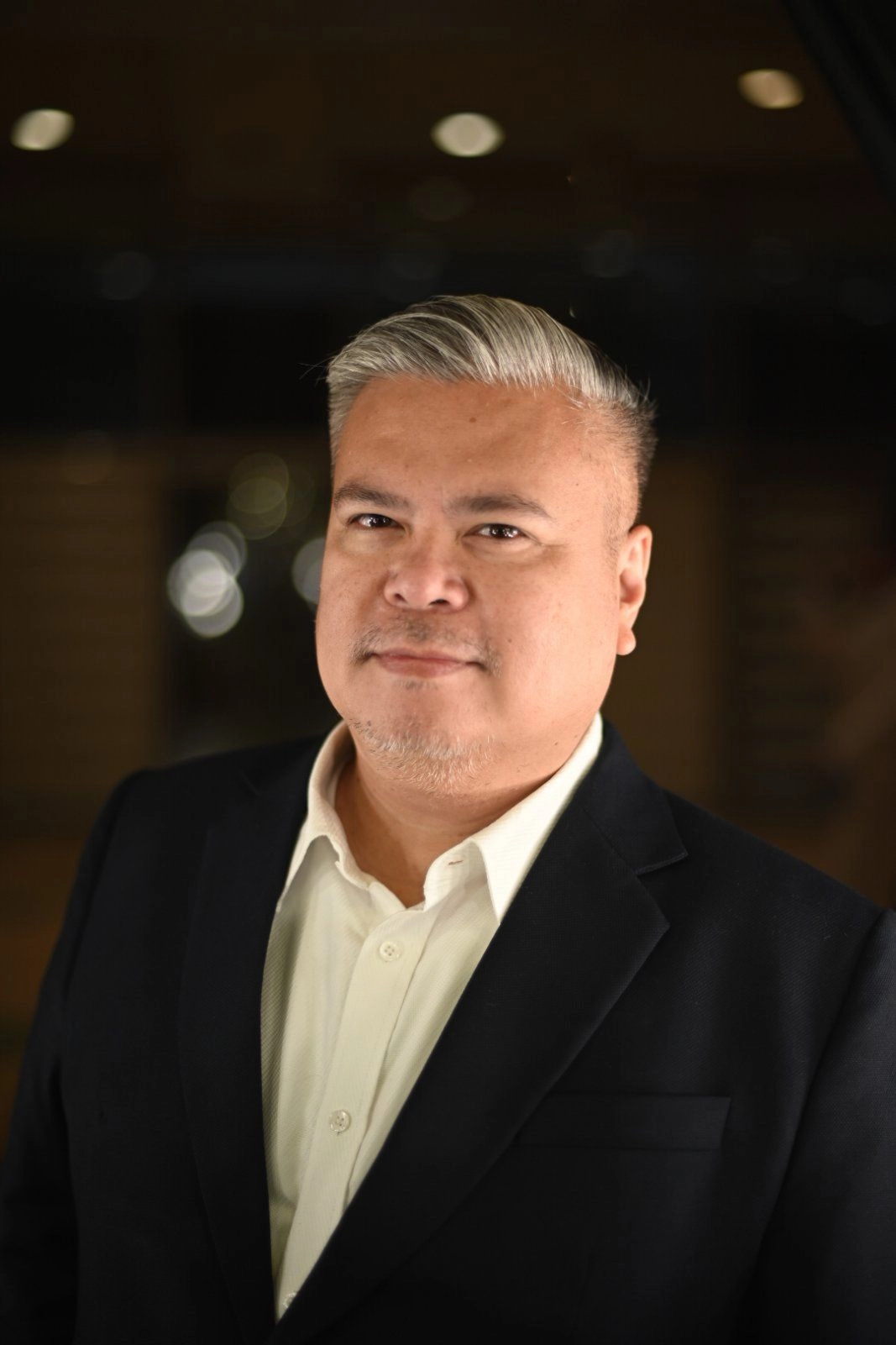
Javier P. Flores
A Juris Doctor from the University of the Philippines College of Law, he is a partner at the Flores & Ofrin Law Office, with expertise in corporation law, property, and litigation. Beyond the courtroom, Javi has made a name for himself as a publisher and editorial force. He is the co-owner of Milflores Publishing, a multi-awarded publishing house known for producing books that seek to elevate Filipino literature. He also founded League Magazine, a publication that spotlights the best governance practices of local leaders. Javi is also a two-time Master Photographer of the Camera Club of the Philippines. He was a former Associate Editor of the Philippine Collegian, the country’s oldest and longest-running student newspaper. Javi also served two terms on the Board of Editors for the Integrated Bar of the Philippines Law Journal.