News
The Song of Roland
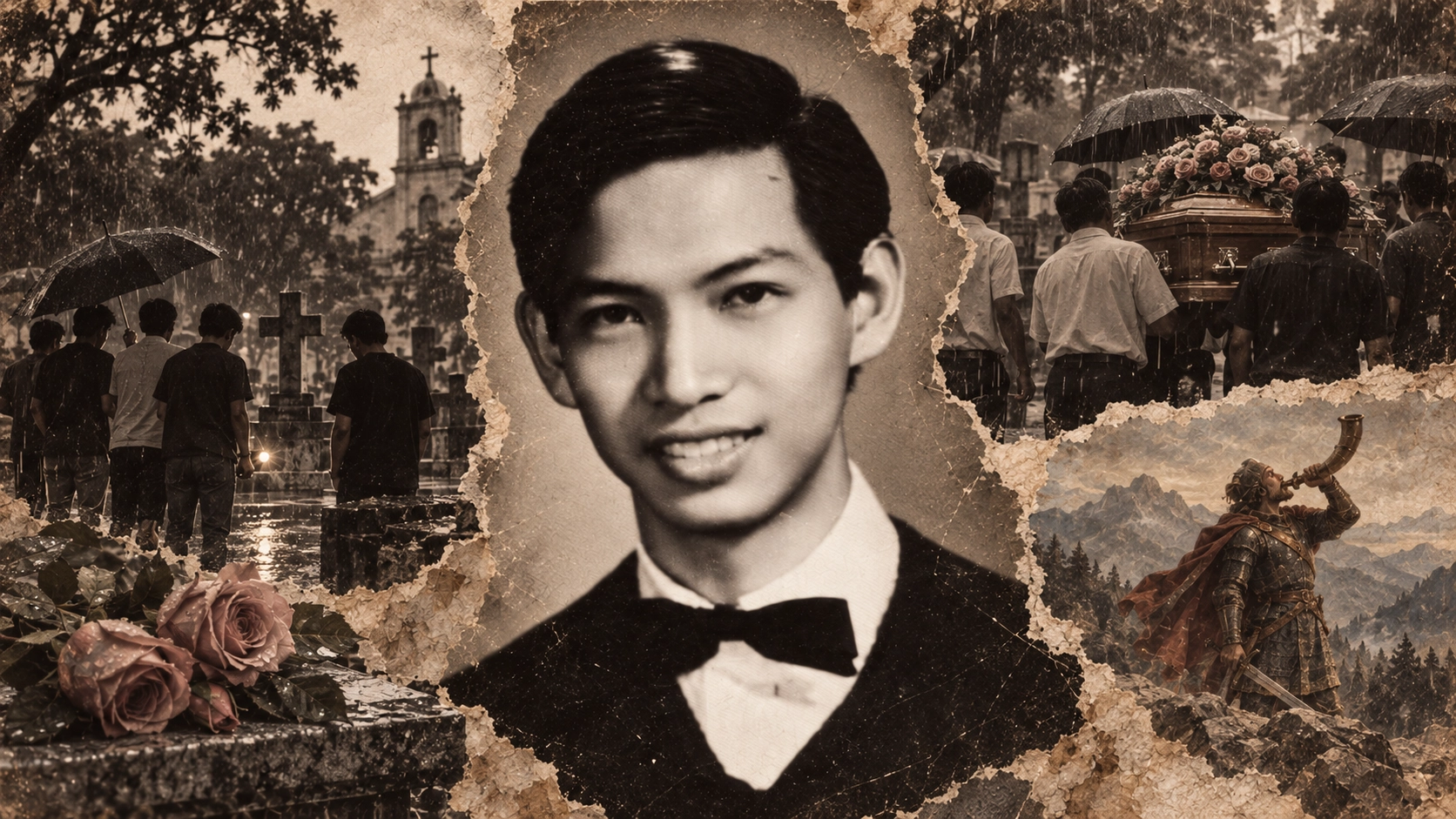
On September 20, 1990, twenty-one years after the death of Rolando San Luis Perez ’66, a group made up largely of then newly minted Batch ’89, along with some of their seniors, trooped north from Diliman to visit his grave in Sta. Maria, Bulacan. Charvy Parra was among them. He had heard about Roland during initiation: “Rolando San Luis Perez, Batch ’66, the Frat Hero.” They had been told that if they became brods, they would eventually visit his grave. Now they were brods, and going to Sta. Maria was one of those things they had to do as part and parcel of being tried and true.
The Santa Maria Public Cemetery was, like all public cemeteries, crowded and unplanned, with graves pressed against one another at different heights and very little room between them. Charvy remembers that even the guide who knew the place had some difficulty finding Roland. They brought flashlights to light their way. Once they gathered around the grave, there was barely enough space for everyone, and some had to stand on the neighboring tombs, but not on Roland’s. They said a prayer, then sang “When You’re Away,” the fraternity love song that is also sung when a brod is laid to rest. After that came the fellowship: gin, more singing, conversation, even some dancing on the nearby tombs. They were young brods visiting the Frat Hero, and they relished the experience.
It had not been raining when they arrived. On the drive home, however, it rained hard. (The windshield wiper on JJ Ocampo ‘89’s Volkswagen was broken, and somewhere along the North Luzon Expressway, Charvy had to reach out and manually work the blade back and forth so they could see the road ahead. More than three decades later, he still remembers himself partly outside that little Volkswagen, moving the wiper with his hand while the car pushed through the downpour.)
It had also rained when they buried Roland.
Emmanuel “Wawel” Osorio ’62 began his account of September 23, 1969 with precisely that memory: “It was raining when we buried Rolando San Luis Perez in the old cemetery of Sta. Maria, Bulacan.” The rain stopped and returned as the funeral procession made its way from the Perez home to the church and finally to the cemetery. Around the coffin stood Roland’s family and his brods, some two hundred of them, gathered to bury a twenty-year-old senior in Economics whose life had ended three nights before on the UP campus.
The names of Batch ’66 were called, and each brod answered, “I answer.” Then Rolando San Luis Perez was called once, twice, and then finally a third time, and each time there was silence. Then another voice broke the silence: "I answer for him," the voice said, "because Roland is now resting." The brods each dropped a pink rose upon his coffin, Batch ’66 lifted him toward the tomb, and before it was sealed they sang “When You’re Away,” the same song Charvy and generations of brods would still be singing over his grave decades later.
Osorio remembered the rain beginning again as the tomb was closed, lightly this time, “not for drenching but for marking loneliness.” He remembered other things about Roland, too. The detail he liked best, “at once beautiful and sad,” was that Roland sent flowers to his sweetheart twice a week. One Saturday, no flowers came. That was the Saturday Roland died.
Roland died on September 20, 1969, during the Loyalty-Arbor Day festivities at UP. Lito Navarro ’65, who was there that evening, remembers that many brods had already left the campus when an incident involving members of Upsilon Sigma Phi and Beta Sigma developed near the Arts and Sciences building. According to Navarro, something was thrown from a passing vehicle toward the brods who remained there; word of the incident reached others who had already left, and some returned to campus. In the confusion that followed, the confrontation escalated into a violent clash between members of the two fraternities.
Navarro remembered Roland as almost the wrong man to become the central figure in such a story. He was amiable, always smiling, a regular in the basement and content to be among his brods, somebody who by first impression “would not hurt a fly.” That night Roland had also drunk too much and could hardly keep his eyes open. In the confusion, he went down, and the fighting froze when someone shouted that Roland was on the ground. Navarro’s enduring image was of Roland afterward on a white-sheeted gurney in the infirmary, the sheet slowly turning red from the blood coming from his scalp.
The brods who regrouped afterward were devastated. Navarro remembers no great council of vengeance, only men trying to comprehend how a joyous evening had ended that way. One question remained above the others: Why Roland, of all brods?
By 1990, Roland had been dead for twenty-one years, but the visits to Sta. Maria were still very much alive. Seniors brought juniors, the juniors signed the old attendance ledger, and the trip became one of those traditions that marked entry into fraternity life. Charvy and the others went because Roland was the Frat Hero and because generations of brods before them had gone.
At the time, that was enough. They were young, they were with their brods, and Roland was part of the fraternity’s living tradition. Only much later did the simpler fact begin to stand out: Roland had been their age when he died. Before he became the Frat Hero, he had been a UP student, a regular in the basement, a brod who drank with his friends and sent flowers to his sweetheart. He never got past twenty. Charvy and the others did.
The visits continued over the years. At some point, Roland’s remains were transferred from the public cemetery in Sta. Maria to Mary the Queen Memorial Garden, also in Sta. Maria, a memorial park owned by the Perez family. Later still, the gathering itself shifted from Bulacan to the Ayala Heights home of Roland’s elder brother in Quezon City.
By the time Charvy joined them there, the annual gathering itself had changed complexion; the occasion had changed considerably from the pilgrimage he was once a part of. It had become smaller and more family-centered, attended mainly by members of the Perez family, Batch ’66, and brods who remained close to them.
The junior tradition was also beginning to fade around this time, and this was even before COVID. No one formally ended the visits; the circle that sustained them simply grew smaller. Batch ’66 was dwindling, as were the family members who organized the gatherings and sent out the invitations, and fewer juniors were being brought into a practice that had once passed naturally from one generation to the next.
There is, of course, another Song of Roland, the medieval epic of the warrior who commanded Charlemagne’s rear guard at Roncevaux and, when defeat was upon him, sounded his great horn, the oliphant, to call Charlemagne back. He died there; the call came too late to save him, but his legend survived him. Our Roland sounded a horn of his own. His death called the brods back first to his grave and, year after year, to the memory of a life that ended at twenty. The old Roland called men back to the field of battle. Ours called them back to remember.
Now the men who knew Roland personally are fewer, and Batch ’66 itself is passing on. Faded photographs may still be around, together with the recollections of brods who remember Sta. Maria, the cramped graves, the flashlights, the gin, the rain and the song. But the visits need not end with the generation that kept them alive.
September 20 should again be a day when juniors and seniors visit Roland together, say the prayer, sing “When You’re Away,” and hear his story. That was how the tradition survived before: one generation brought the next. There is no reason we cannot do so again.
About the Author
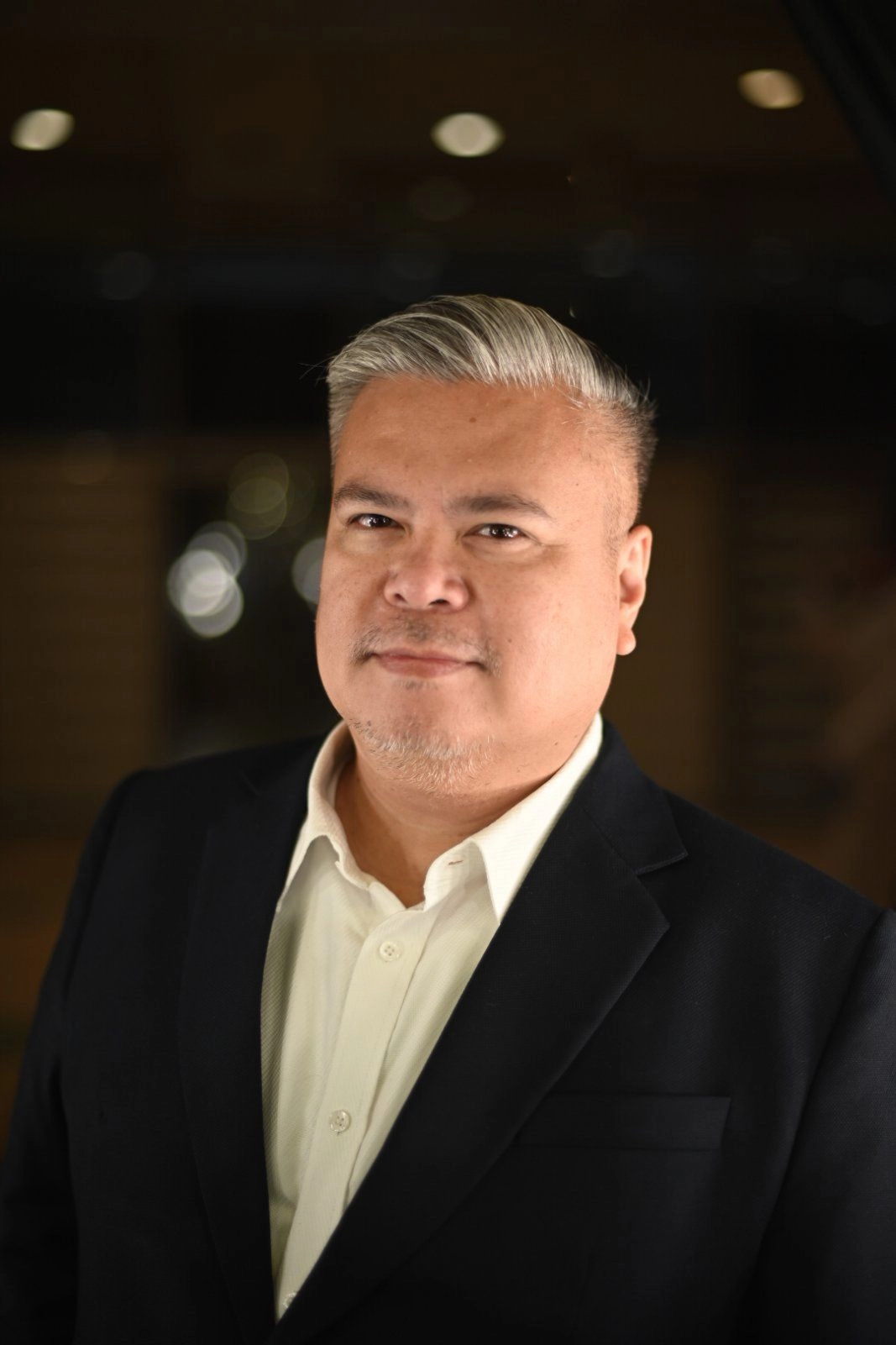
Javier P. Flores
A Juris Doctor from the University of the Philippines College of Law, he is a partner at the Flores & Ofrin Law Office, with expertise in corporation law, property, and litigation. Beyond the courtroom, Javi has made a name for himself as a publisher and editorial force. He is the co-owner of Milflores Publishing, a multi-awarded publishing house known for producing books that seek to elevate Filipino literature. He also founded League Magazine, a publication that spotlights the best governance practices of local leaders. Javi is also a two-time Master Photographer of the Camera Club of the Philippines. He was a former Associate Editor of the Philippine Collegian, the country’s oldest and longest-running student newspaper. Javi also served two terms on the Board of Editors for the Integrated Bar of the Philippines Law Journal.