News
When It Rains, It Pours: A Harvest of Upsilonian Honors at the 2026 UPAA Awards
It was a rainy evening outside a jam-packed Ang Bahay ng Alumni in UP Diliman. Inside, there was another kind of rain.
Of the 52 individual alumni honored by the UPAA that evening, 13 were Fellows of the Upsilon Sigma Phi. One in every four. Twenty-five percent. Among them was the recipient of the year's highest alumni distinction, while another was one of only three recipients of the UPAA Presidential Award.
The awards were held on Saturday, August 15, at Ang Bahay ng Alumni, bringing together UP graduates distinguished in government, business, science, law, diplomacy, agriculture, infrastructure and community service. The UPAA describes its awards as recognizing alumni whose achievements combine professional excellence with integrity, service and lasting impact. On this particular evening, the Fellowship had reason to recognize something more: the extraordinary breadth of the work for which its brothers were being honored.
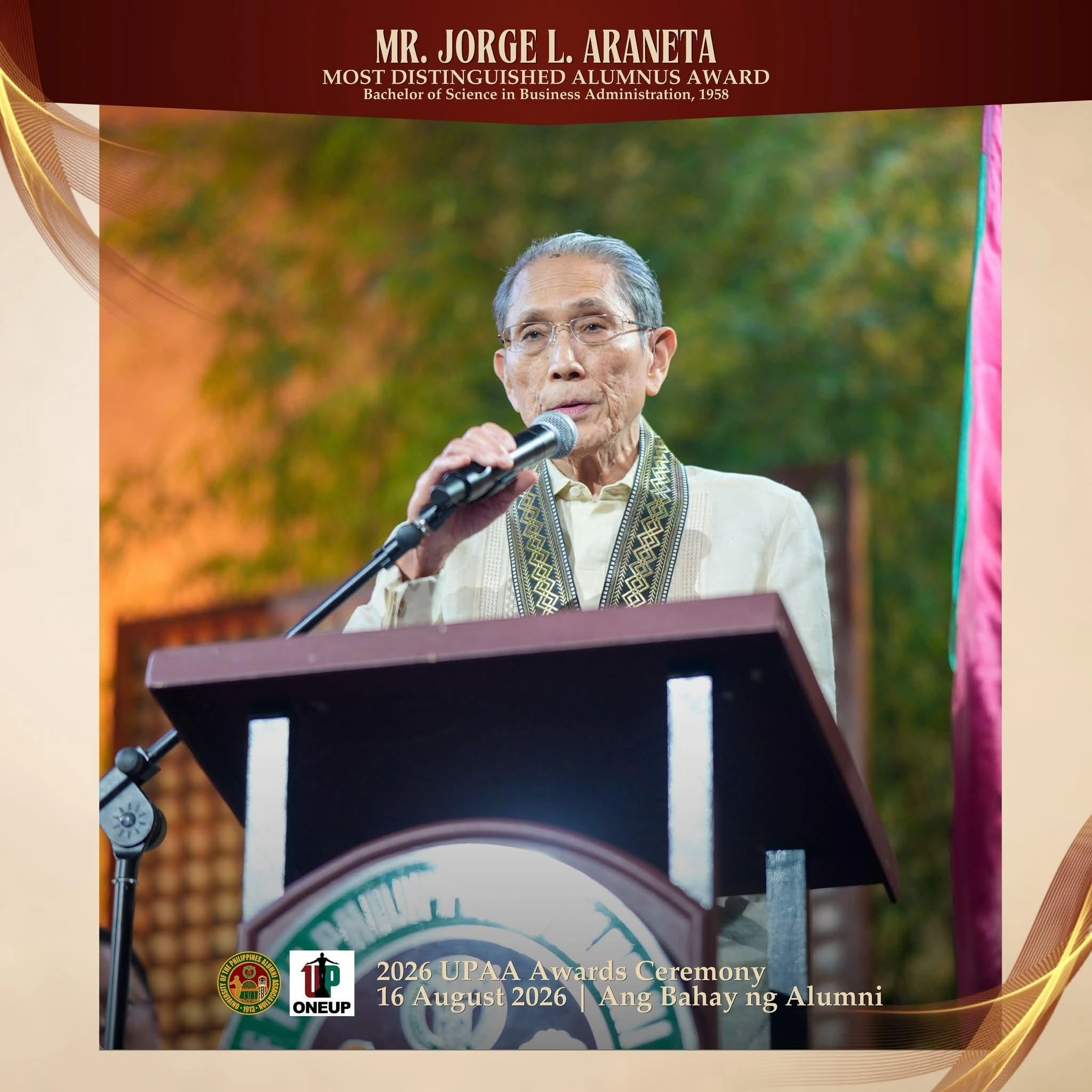
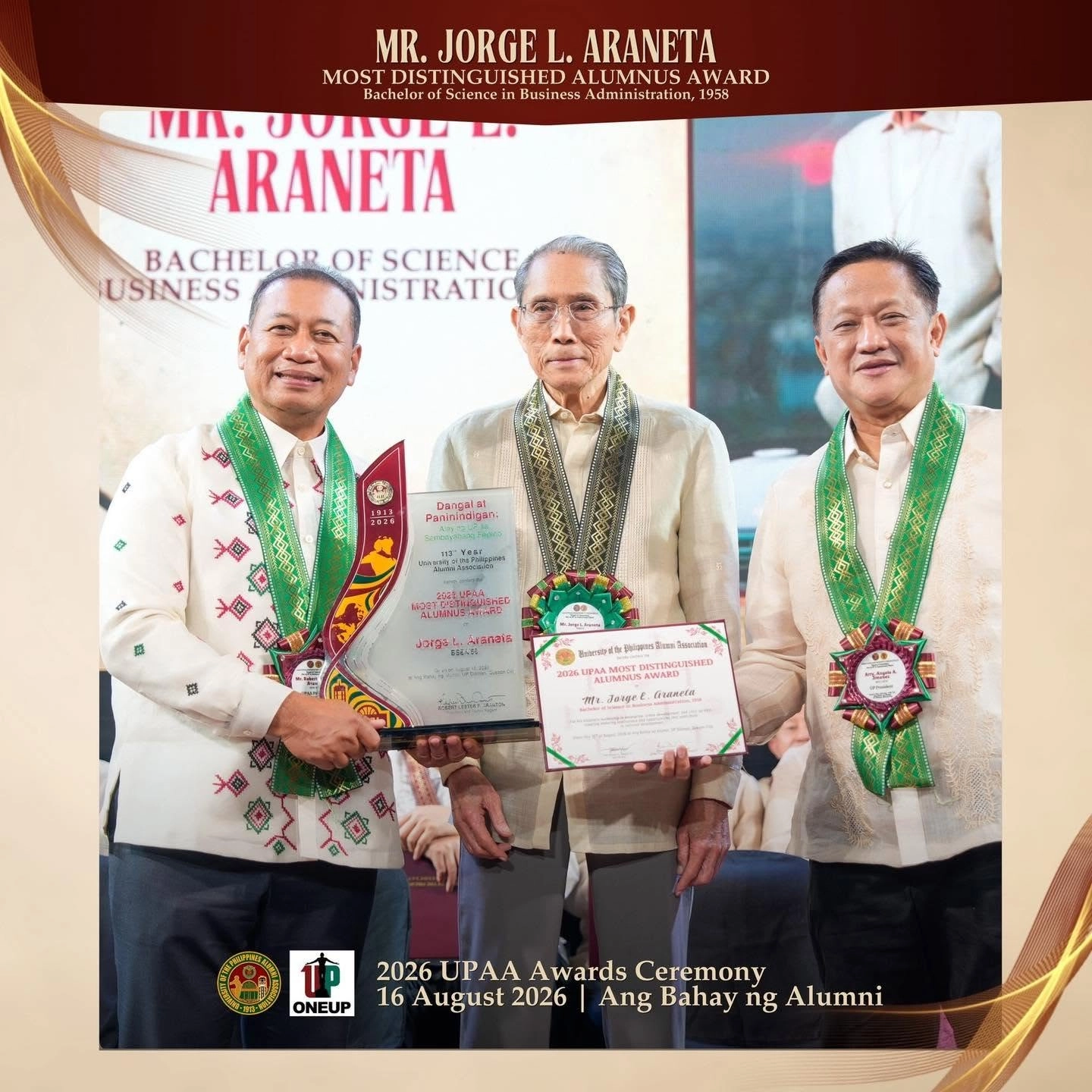
Leading them was Jorge L. Araneta, Chairman, President and CEO of the Araneta Group, who received the 2026 UPAA Most Distinguished Alumnus Award.
Araneta has led the family enterprise since 1970, presiding over the transformation of what was once the Araneta Center into today's Araneta City, one of Metro Manila's pioneering integrated commercial and entertainment districts. But the UPAA's highest honor went beyond the buildings, businesses, and landmarks associated with his name. Through the J. Amado Araneta Foundation and institutions such as Gateway Gallery, his work has extended to education, culture, heritage preservation, youth development and community welfare. The UPAA cited a lifetime devoted to nation-building, philanthropy and community development. The Fellowship had already recognized him with the Upsilon Noble and Outstanding Award. This time, it was the larger UP alumni community that placed him first among its honorees.
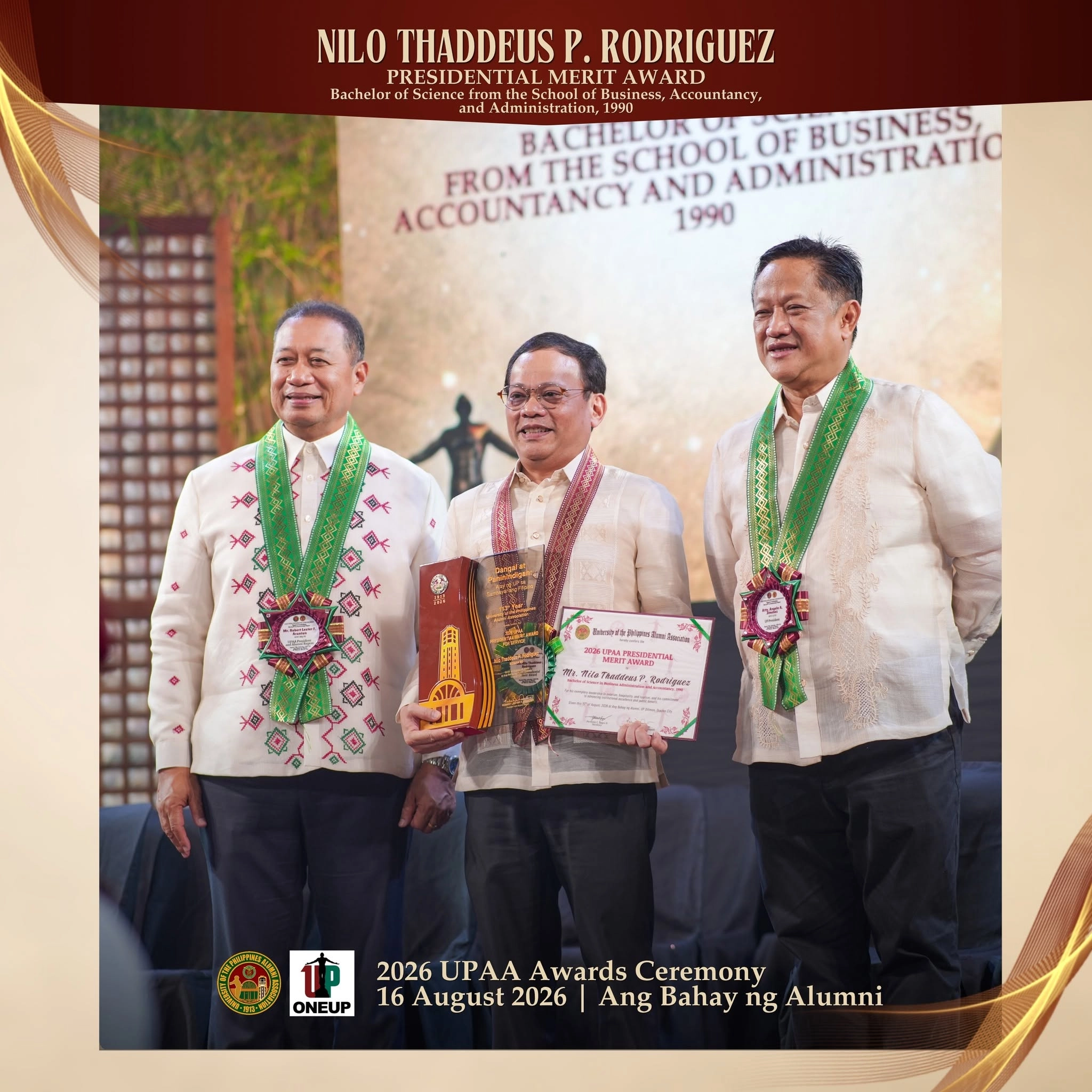
Araneta was not the only Upsilonian to receive one of the evening’s special distinctions. Nilo Thaddeus P. Rodriguez, President and CEO of Travellers International Hotel Group, received the 2026 UPAA Presidential Merit Award. Rodriguez has built a career across finance, aviation, and hospitality. As Chief Financial Officer of Philippine Airlines during the pandemic, he helped steer the flag carrier through its financial restructuring and eventual recovery. He now leads Travellers International and Newport World Resorts, while also supporting programs in health, education, tourism and the arts through the group's foundation. His recognition adds another field to an already unusually broad Upsilonian showing: corporate leadership and the rebuilding of major Philippine institutions.
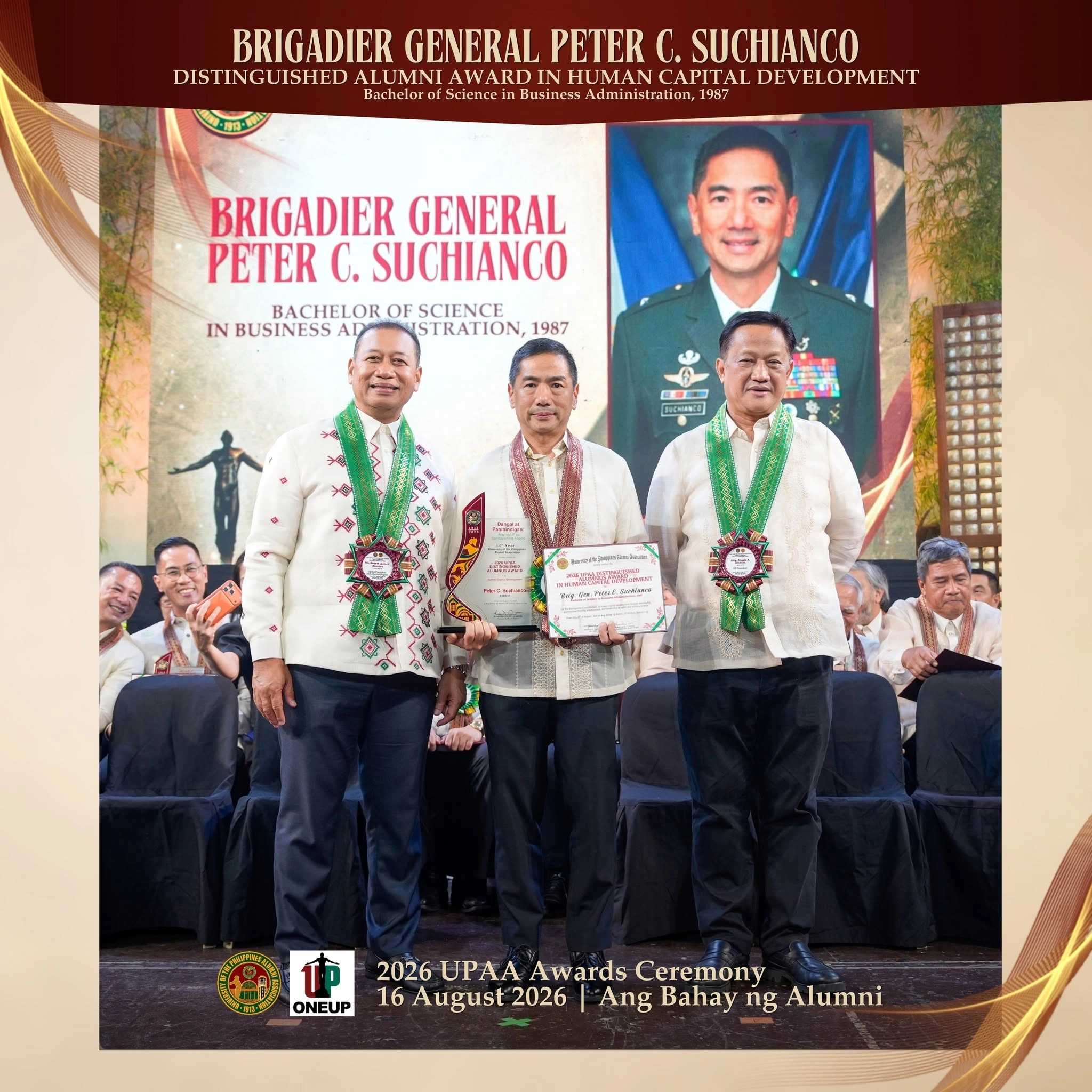
Brigadier General Peter C. Suchianco, JAGS (Res), received the Distinguished Alumnus Award in Human Capital Development, and his record explains the category almost literally.
Suchianco's path was hardly predetermined. The early death of his father nearly forced him to stop schooling, and he worked his way through his education before earning his Business Administration degree from UP and later his law degree from Ateneo. He was commissioned into the Armed Forces Reserve in 1999 and eventually rose to the rank of Brigadier General. But the more telling numbers are the people he developed along the way. Under his leadership, the 1st Technical and Administrative Service Brigade in the National Capital Region expanded from roughly 800 to nearly 3,000 reservists, with training in humanitarian assistance, disaster response, medical operations, and peace-building. Seeing another pool of underused talent, he organized and built the Judge Advocate General's Service Reserve, growing it from only two lawyers to 179 by 2025.
It is an unusual form of human capital development: not merely training people for advancement, but building an institution through which lawyers, professionals, and volunteers can place their skills at the service of the country.
In Good Governance, the Fellowship had an especially strong showing.
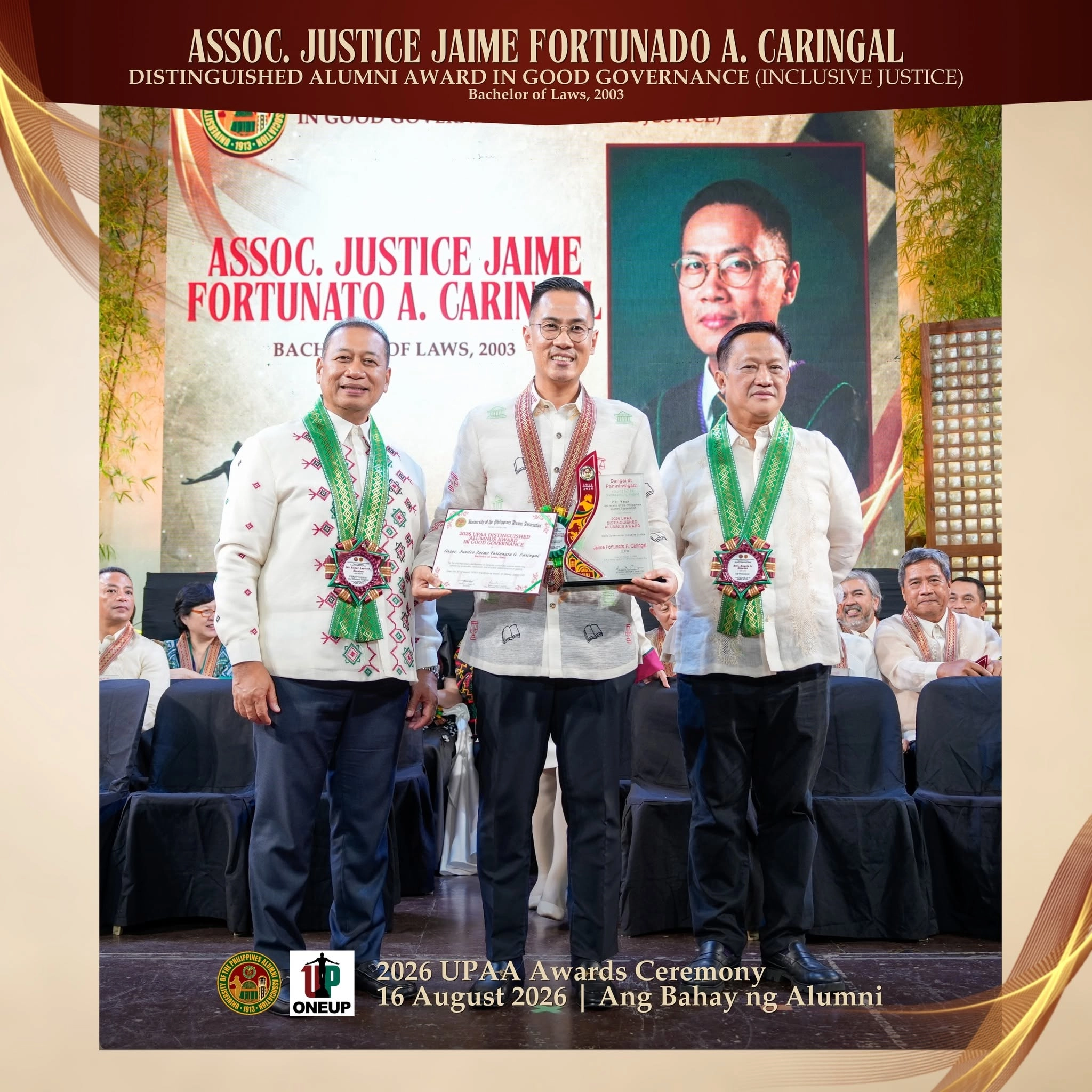
Court of Appeals Associate Justice Jaime Fortunato A. Caringal was recognized for Inclusive Justice. Since his appointment to the trial court and later to the appellate court in 2022, Caringal has rendered more than 1,800 decisions and resolutions, but speed and docket management explain only part of the award. He has worked through Supreme Court committees and the Justice Sector Coordinating Council to strengthen Justice Zones, where courts, prosecutors, law enforcement agencies, corrections officials and other institutions are made to coordinate rather than operate in isolation.
His work has also touched some of the justice system's less visible but persistent problems: gender sensitivity, treatment of women in conflict with the law, safeguards for victims, and jail congestion. Before joining the Court of Appeals, he served as a Regional Trial Court judge in Mandaluyong, leaving no backlog of cases submitted for decision. Earlier still, he served in the Department of Transportation and Communications and the Government Service Insurance System. His career has crossed the executive and judicial branches and the classroom, where he has taught Remedial Law at UP College of Law, the Ateneo Law School and the Philippine Judicial Academy. Official judicial records confirm his progression from government executive service to the trial bench and ultimately the Court of Appeals.
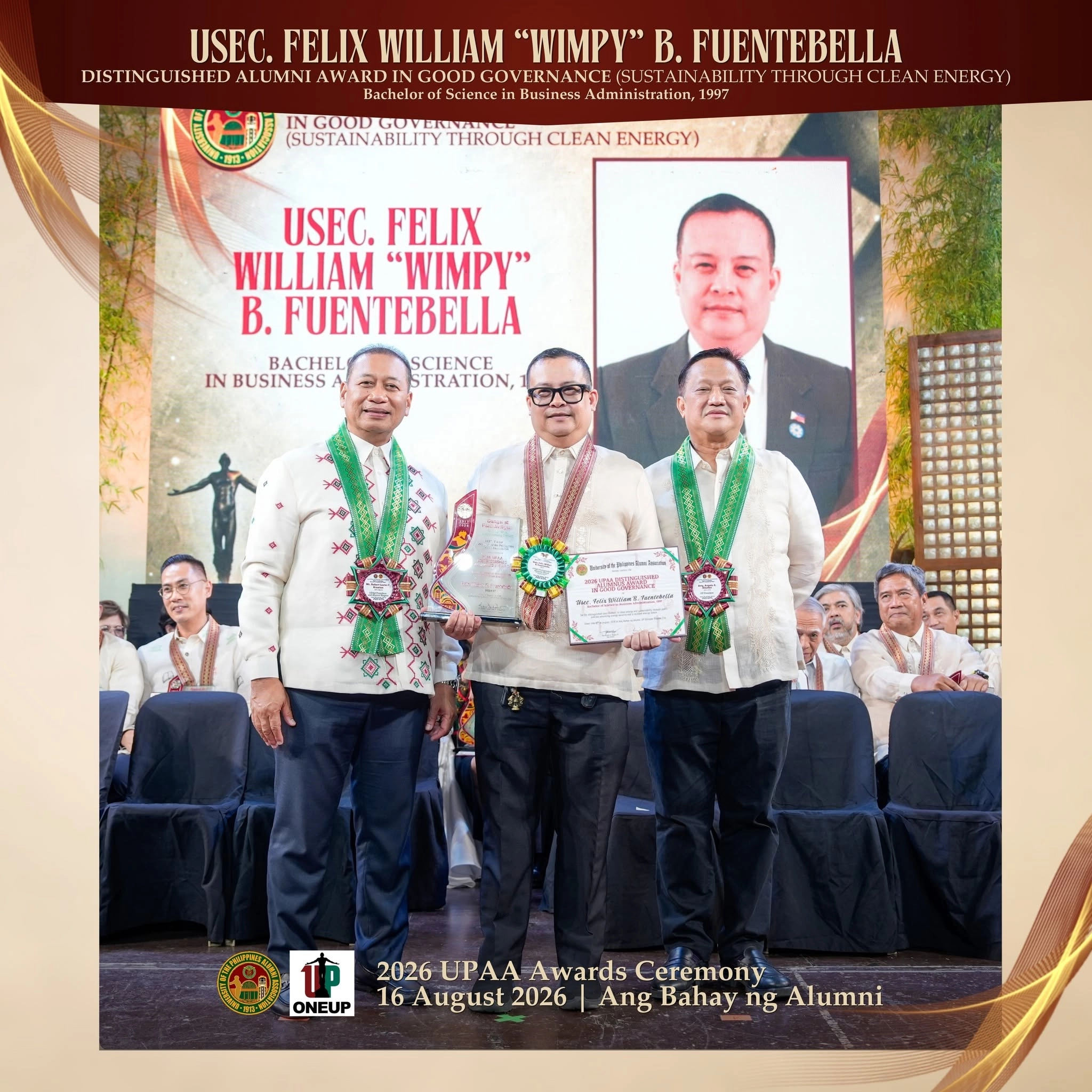
Felix William “Wimpy” Fuentebella, Undersecretary of the Department of Energy, received the Distinguished Alumni Award in Good Governance for Sustainability Through Clean Energy.
Fuentebella has spent a decade at the Department of Energy working at the difficult intersection of energy security and the energy transition. In 2026, as Chair of the ASEAN Senior Officials Meeting on Energy, he holds a role that places the Philippines directly at the center of regional discussions on power connectivity, renewable energy, and energy security. His work has also taken him to international climate negotiations since COP26. Before the DOE, his public career included service in Congress, the Housing and Land Use Regulatory Board and the Housing and Urban Development Coordinating Council. He now also teaches at the UP Virata School of Business.
The award recognizes a challenge that is simple to describe but difficult to deliver: guiding the Philippines through an energy transition that ultimately strengthens national resiliency. It is about ensuring that the country has enough reliable and affordable power to grow today, while steadily building a cleaner, more diversified and more secure energy system—one that is better able to withstand geopolitical shocks, supply disruptions, extreme weather and the uncertainties of the future.
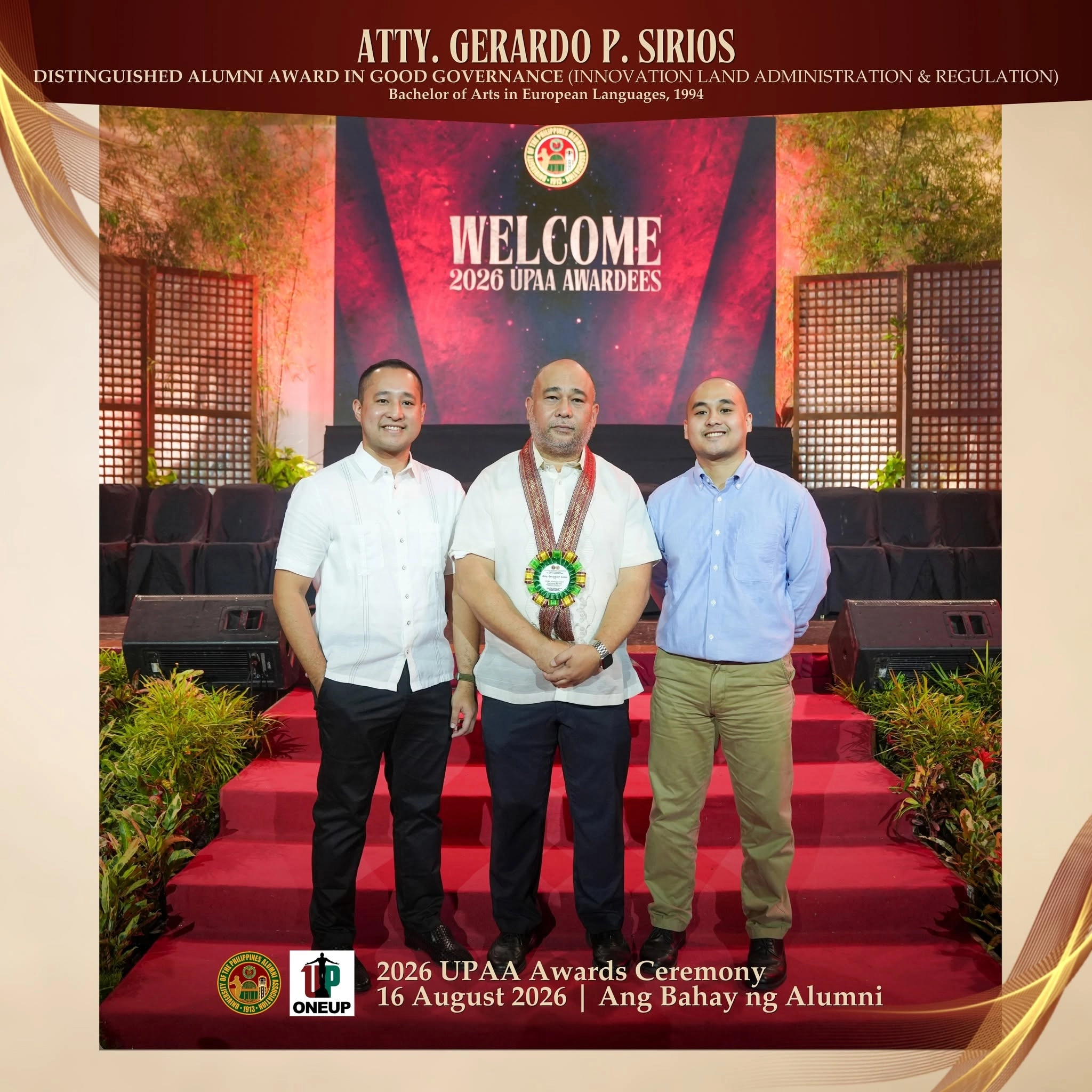
Gerardo “Gerry” P. Sirios, Administrator of the Land Registration Authority and incumbent President of the Upsilon Sigma Phi Alumni Association, was cited for Innovation in Land Administration and Regulation.
Land registration is one of those functions of government that becomes most visible when it fails. Lost records, slow transactions, fraudulent documents, and uncertain ownership can affect everything from a family's home to billions of pesos in investment. Under Sirios, the LRA has continued the movement toward electronic land records and more efficient registration, while programs such as Handog Titulo have sought to extend the security of registered ownership to ordinary Filipinos. His career is also unusually broad, encompassing work in all three branches of government before his appointment as LRA Administrator in 2022. (He was actually a UPAA Awardee for 2025, but he was unable to attend the awarding ceremonies for that year.)
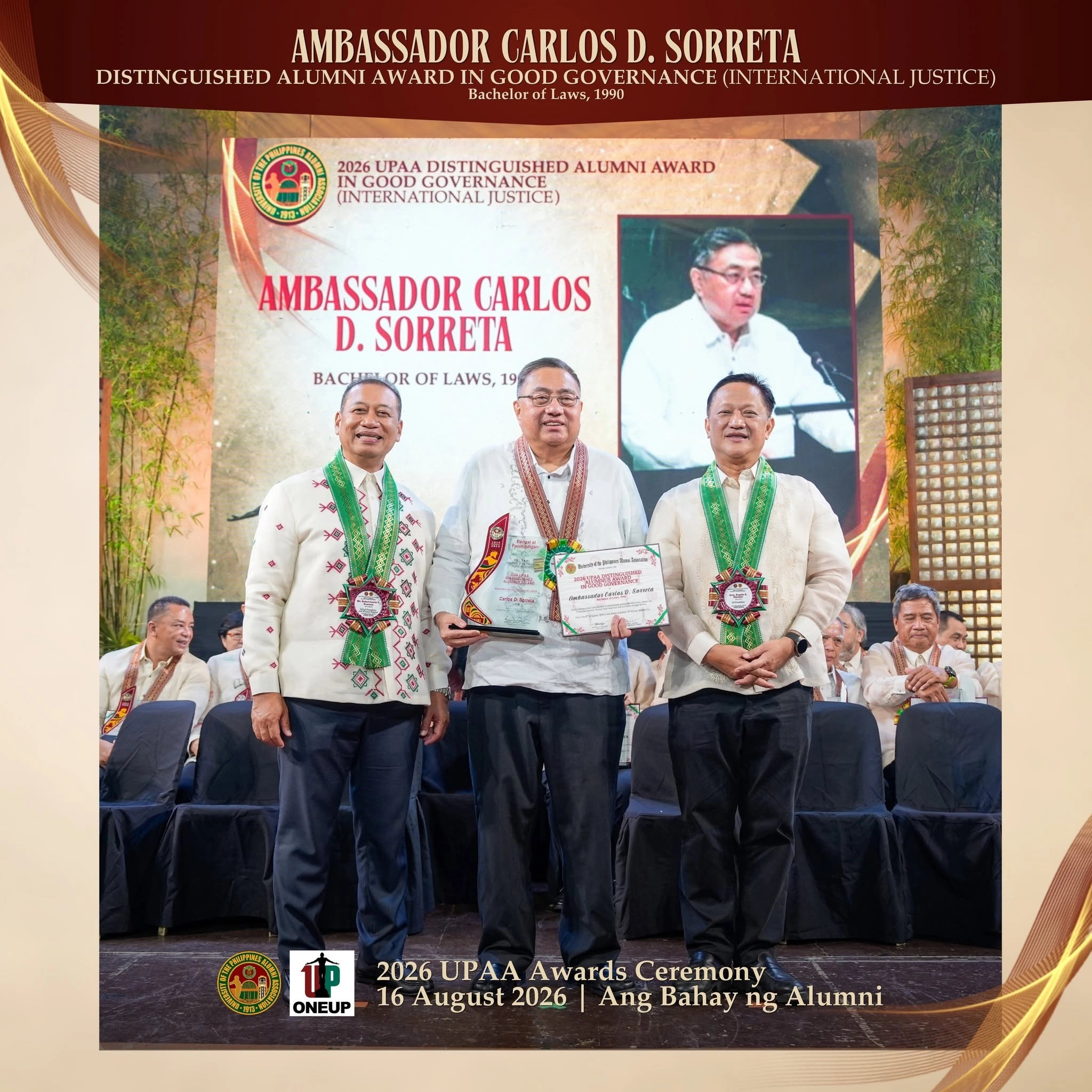
Then there is Ambassador Carlos D. Sorreta, recipient of the Distinguished Alumni Award in Good Governance for International Justice.
Few Filipino diplomats have accumulated a comparable record in international law. Sorreta is the Philippine Permanent Representative to the United Nations and other international organizations in Geneva. He has served as Ambassador to Russia, Deputy Chief of Mission in Washington, Deputy Permanent Representative to the UN in New York, Foreign Affairs Undersecretary and Director-General of the Foreign Service Institute. He has chaired bodies dealing with disarmament, torture, human rights and the UN Charter, and today chairs the Assembly of the World Intellectual Property Organization.
More exceptionally, his career has taken him before both of the world's principal international judicial bodies concerned with the disputes in which the Philippines has participated. Records of the International Court of Justice show Sorreta appearing as counsel for the Philippines as early as the Court's 1995 proceedings on the legality of nuclear weapons, and again as part of the Philippine delegation in the climate-change advisory proceedings in 2024. In 2023, he stood before the International Tribunal for the Law of the Sea to present the Philippine position on states' obligations concerning climate change and the marine environment.
The awards also showed how far the Fellowship's reach extends across other professions.
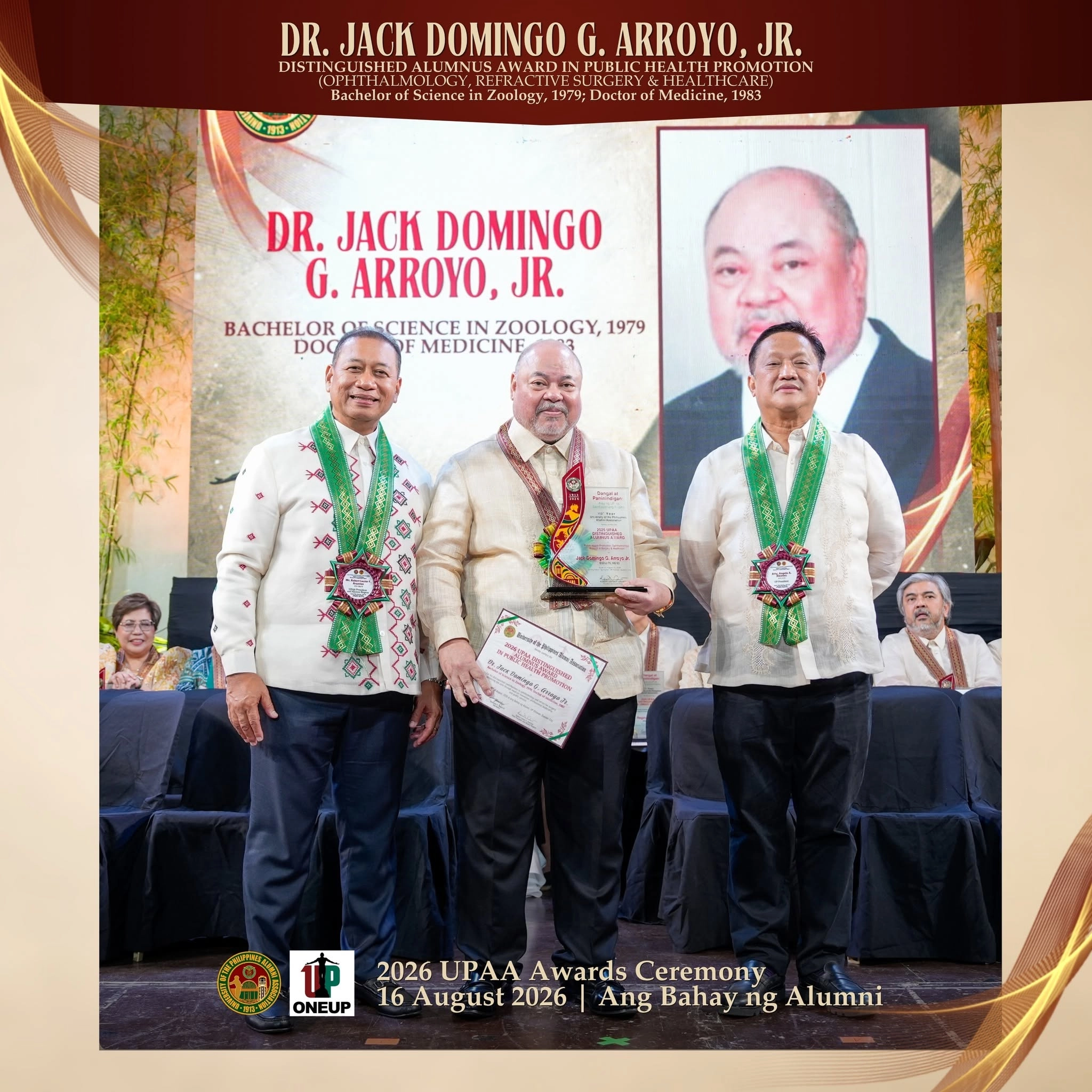
Dr. Jack Domingo G. Arroyo Jr. ’74 received the Distinguished Alumni Award in Public Health Promotion for Ophthalmology, Refractive Surgery and Healthcare. Arroyo was one of the founders of the American Eye Center in 1995 and performed the first LASIK surgery in the Philippines that same year. He would go on to become one of the country’s leading refractive surgeons, while also serving in professional organizations and on the PhilHealth Board. His recognition adds medicine and healthcare to an already remarkably broad Upsilonian showing at this year’s UPAA Awards.
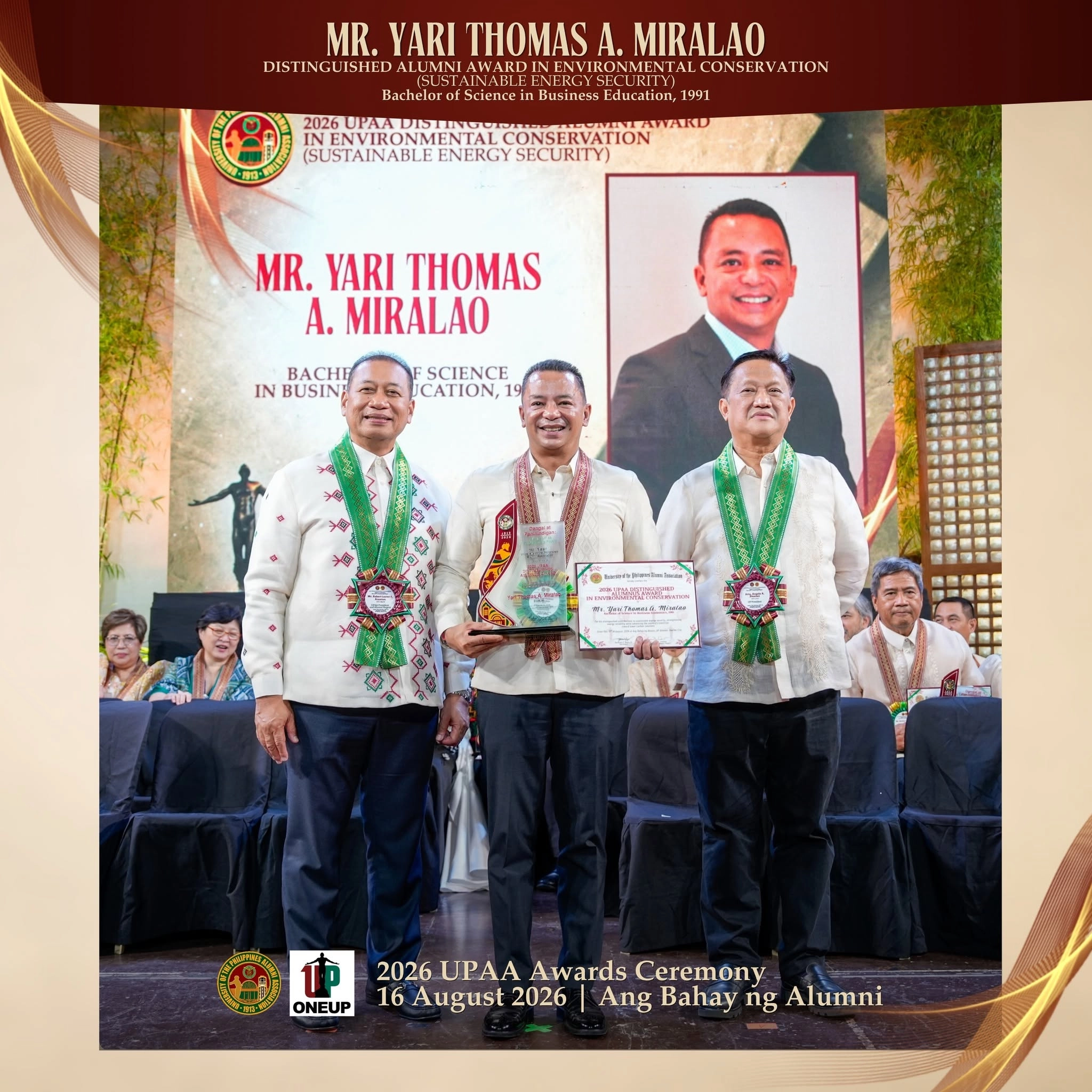
Yari A. Miralao received the Distinguished Alumni Award in Environmental Conservation for Sustainable Energy Security. Miralao, the immediate past president of the USPAA, is President and CEO of MGEN Gas Energy Holdings, Meralco PowerGen's natural-gas business. His work sits inside one of the central economic and environmental questions confronting the country: how to build a power system reliable enough for a growing economy while reducing dependence on older, more carbon-intensive generation. MGEN has been examining the conversion of prospective coal projects to gas, positioning natural gas as part of the transition toward a power mix that increasingly accommodates renewables.
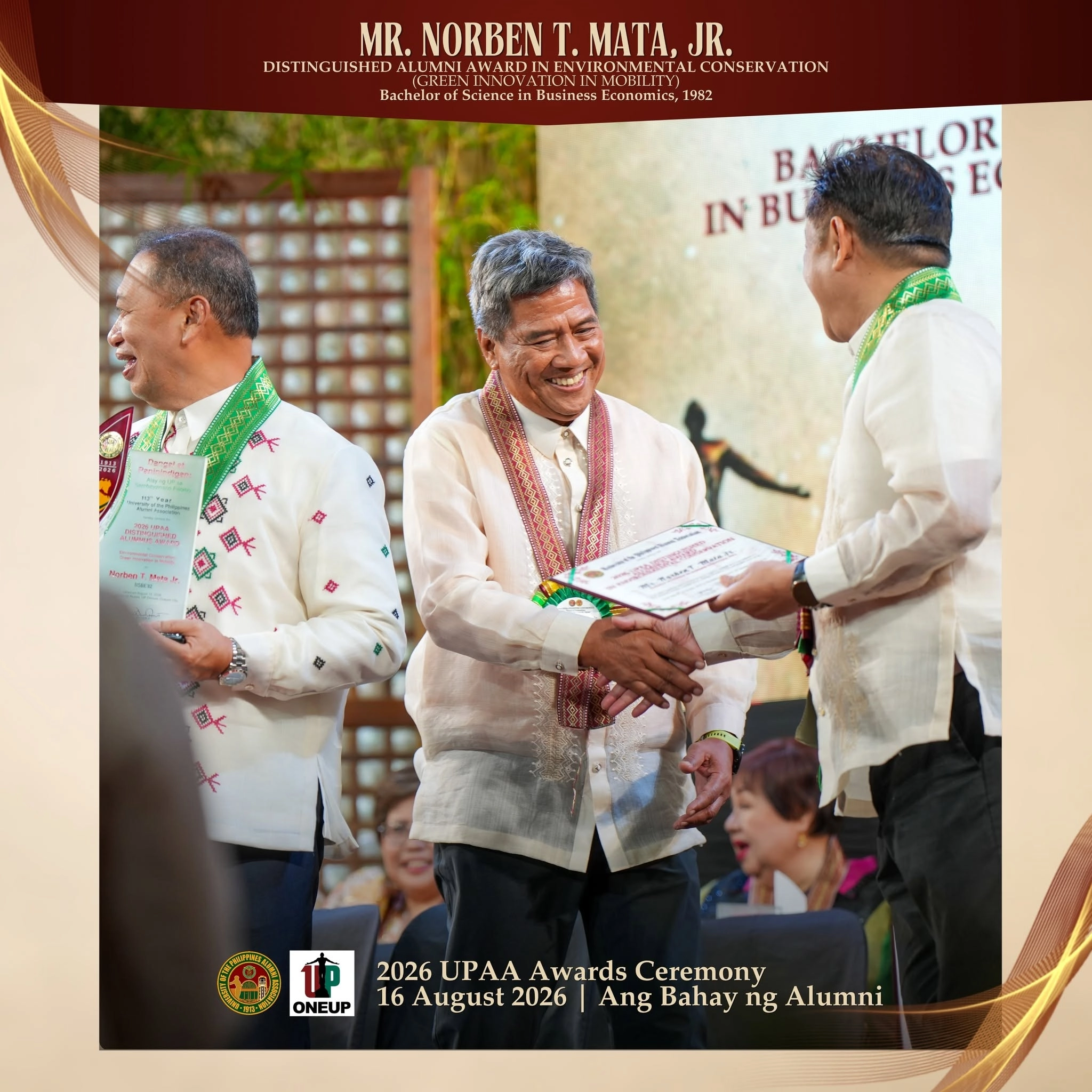
Also recognized in Environmental Conservation was Norben T. Mata Jr., who received the Distinguished Alumni Award for Green Innovation in Mobility.
Mata's work has long been associated with mobility and the motorcycle sector in Mindanao. In Davao, he is known as the man behind Moto-X Davao and Moto-X Farm, working with local government and private partners to develop motorcycle sports and related activities in the region. His UPAA recognition adds yet another dimension to the range of work represented by the Upsilonian awardees: finding more sustainable ways of moving people in a country where transportation remains both an economic necessity and an environmental challenge.
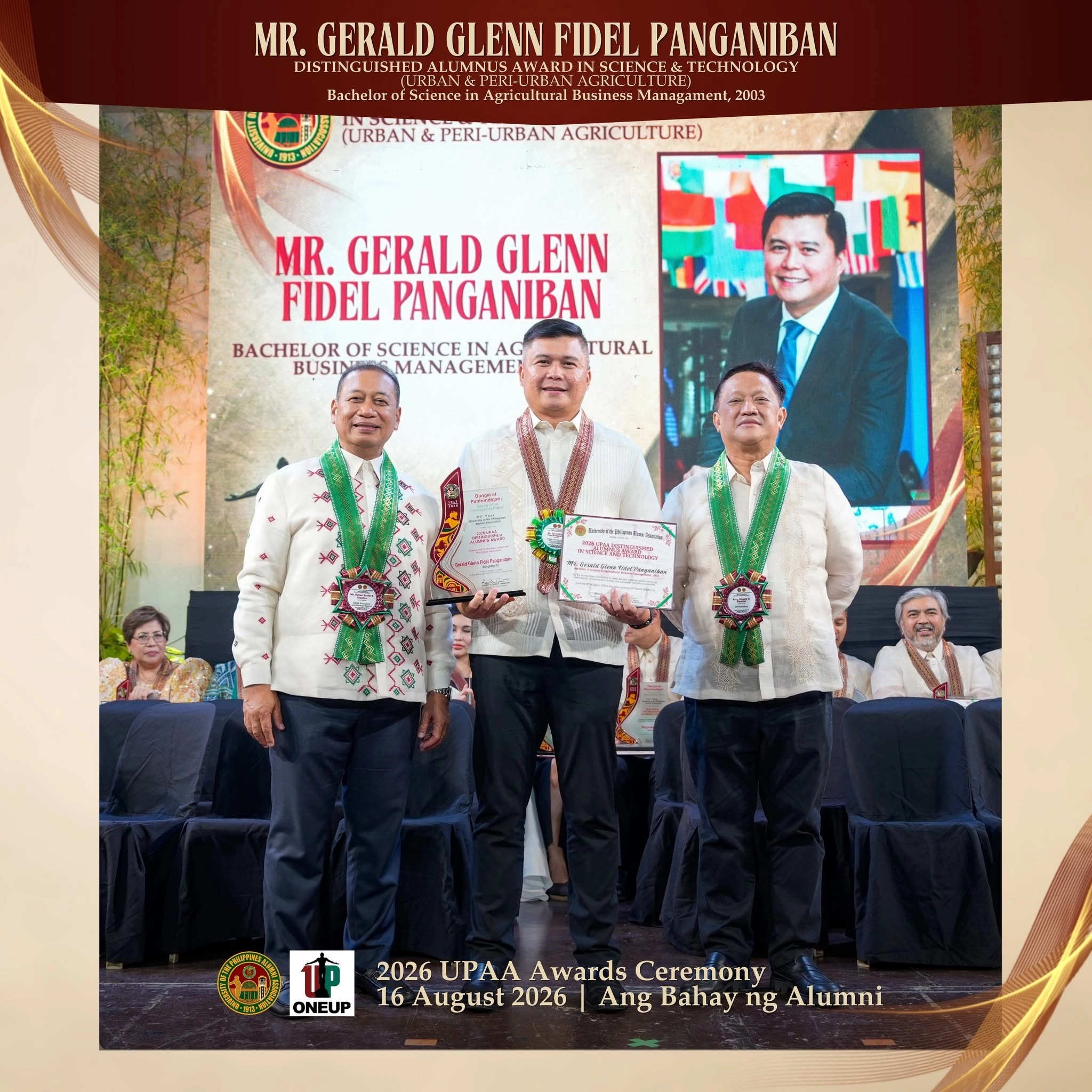
Dr. Gerald Glenn Fidel Panganiban, Director of the Bureau of Plant Industry and the National Urban and Peri-Urban Agriculture Program, was recognized in Science and Technology for Urban and Peri-Urban Agriculture.
His work asks a deceptively simple question: as more Filipinos live in cities, why should food production remain something that happens only somewhere else? Under programs he leads, the Department of Agriculture has promoted community gardens, hydroponics, urban farms and other systems that turn limited urban spaces into productive ones. The program links food security with nutrition, livelihoods, environmental sustainability and community resilience. Partnerships have brought urban agriculture into malls, communities and even public hospitals.
Eric Gene C. Pilapil, Chairman of the USPAA Board of Trustees, received the Distinguished Alumni Award in Community Empowerment for Digital Infrastructure and Social Welfare Leadership.
Pilapil has spent much of his professional career behind systems that millions of Filipinos use without necessarily knowing who built them. As a senior legal executive of Stradcom, he helped negotiate and secure financing for a US$90-million nationwide build-own-operate information technology project, including the first transaction approved under the Securitization Law, and worked on major technology and government infrastructure transactions. He was similarly involved in the Land Titling Computerization Project, from negotiating the winning BOO contract in 2000 to closing funding cycles for its equity and syndicated loans totaling almost ₱7B. His career has involved the legal architecture behind digital public services: the contracts, financing and institutional arrangements without which modernization remains only a proposal.
That same instinct for institution-building is visible within the Fellowship. As USPAA Chairman, Pilapil has pushed the alumni association toward more permanent systems of student assistance, legal assistance and digital connectivity rather than relying solely on informal, one-time support.
Melvin John M. Tan received the Distinguished Alumni Award in Community Empowerment for Transformative Water Infrastructure and Community Resilience.
Tan serves as COO for Manila Water Company, overseeing a nationwide portfolio of operations outside Metro Manila across Luzon, Visayas, and Mindanao. He is also the President of WawaJVCo and has been involved in the Upper Wawa Bulk Water Supply Project since its earliest stages. The scale alone explains why the project matters. Upper Wawa is the largest water-supply dam built in the Philippines in more than 50 years and can supply up to 710 million liters of water per day, providing Metro Manila and Rizal with a major alternative source and reducing dependence on Angat. The project was completed seven months ahead of schedule and, in 2026, was named Water Project of the Year at the Global Water Awards.
Water infrastructure rarely attracts attention until there is no water. Tan's work is therefore community empowerment in its most physical form: a reservoir, pipelines, and systems intended to give millions of people something as basic as a more secure water supply.
And the Upsilon connection that evening did not stop with the individual awards.
The Puyat Family was recognized with the UPAA's Four-Generation Multigenerational Alumni Family Award, honoring a UP tradition stretching across four generations. The family name also holds an important place in Upsilon's history. Former Senate President Gil J. Puyat, businessman, economist, legislator, and former dean of the UP College of Business Administration, was a Upsilonian, and the family has produced a number of Fellows across succeeding generations.
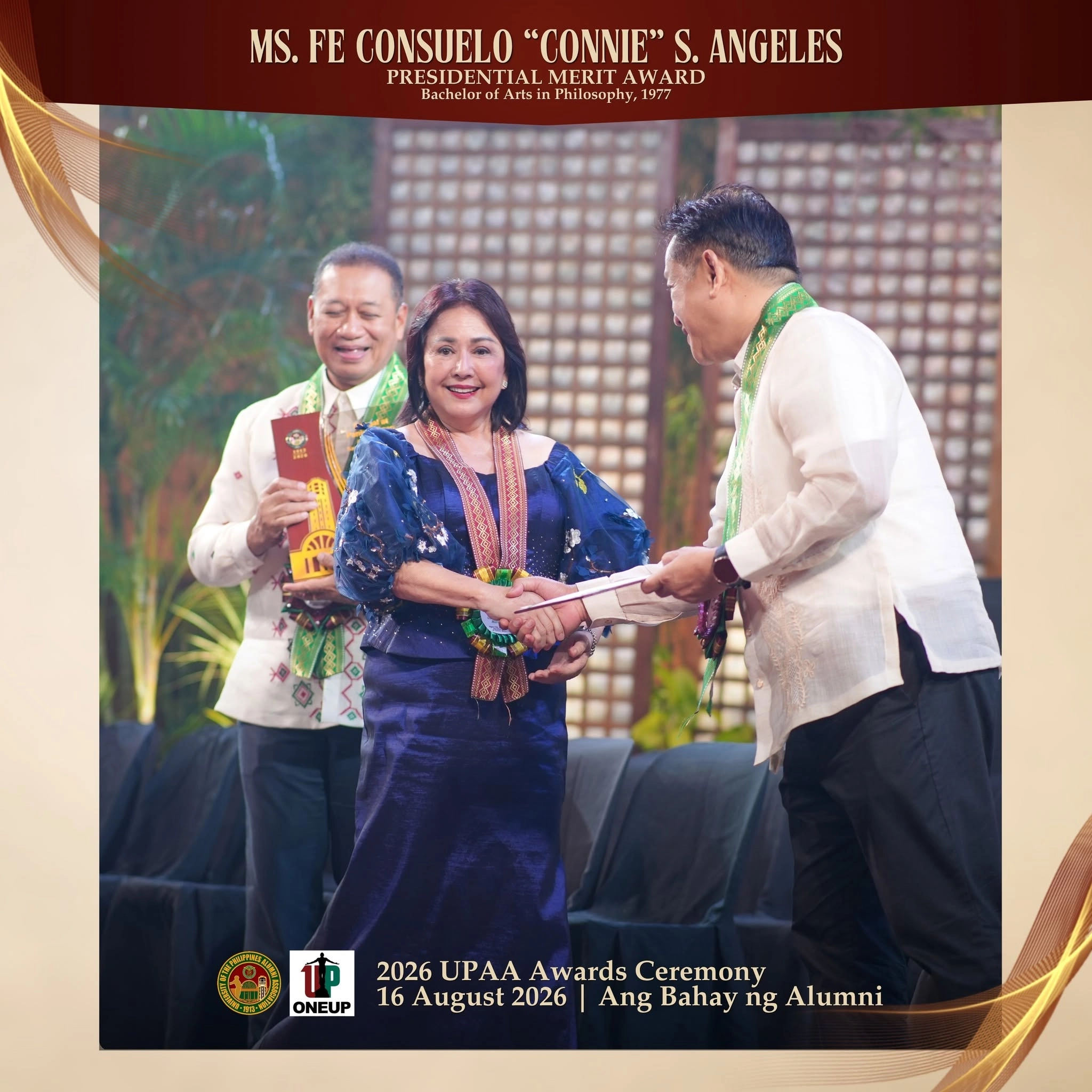
The evening had other familiar connections. Atty. Marisol De Luna Anenias and Fe Consuelo S. Angeles Ganuelas, both sisters of Sigma Delta Phi, were likewise among those honored by the UPAA. The recognition of both Fellows and Sigma Deltans made the evening an especially memorable one for two organizations whose histories have long been intertwined at UP.
But numbers alone do not explain why August 15 should matter to the Fellowship.
Thirteen of the 52 individual honorees were Upsilonians. One in every four. The evening's highest individual distinction also went to a Fellow.
More important is what the awards were for.
There was no single Upsilon profession represented. The Fellows were recognized for achievements in business, law, diplomacy, energy, land administration, agriculture, environmental conservation, sustainable mobility, military service, digital infrastructure, water security, and tourism.
There was also something closer to home. Among the awardees were USPAA Chairman Eric Pilapil, President Gerry Sirios, immediate past president Yari Miralao, and former chairman Peter Suchianco. The men entrusted with leading the Fellowship were being recognized individually for the work they had done outside it.
And that is what gives these awards particular weight. These were not honors Upsilon bestowed on its own. They came from the UP Alumni Association, looking at careers built over decades and contributions made well beyond the fraternity.
Outside Bahay ng Alumni, the rain kept falling. Inside, one Upsilonian after another was called to the stage. The awards came in one evening. The work behind them took a lifetime.
About the Author
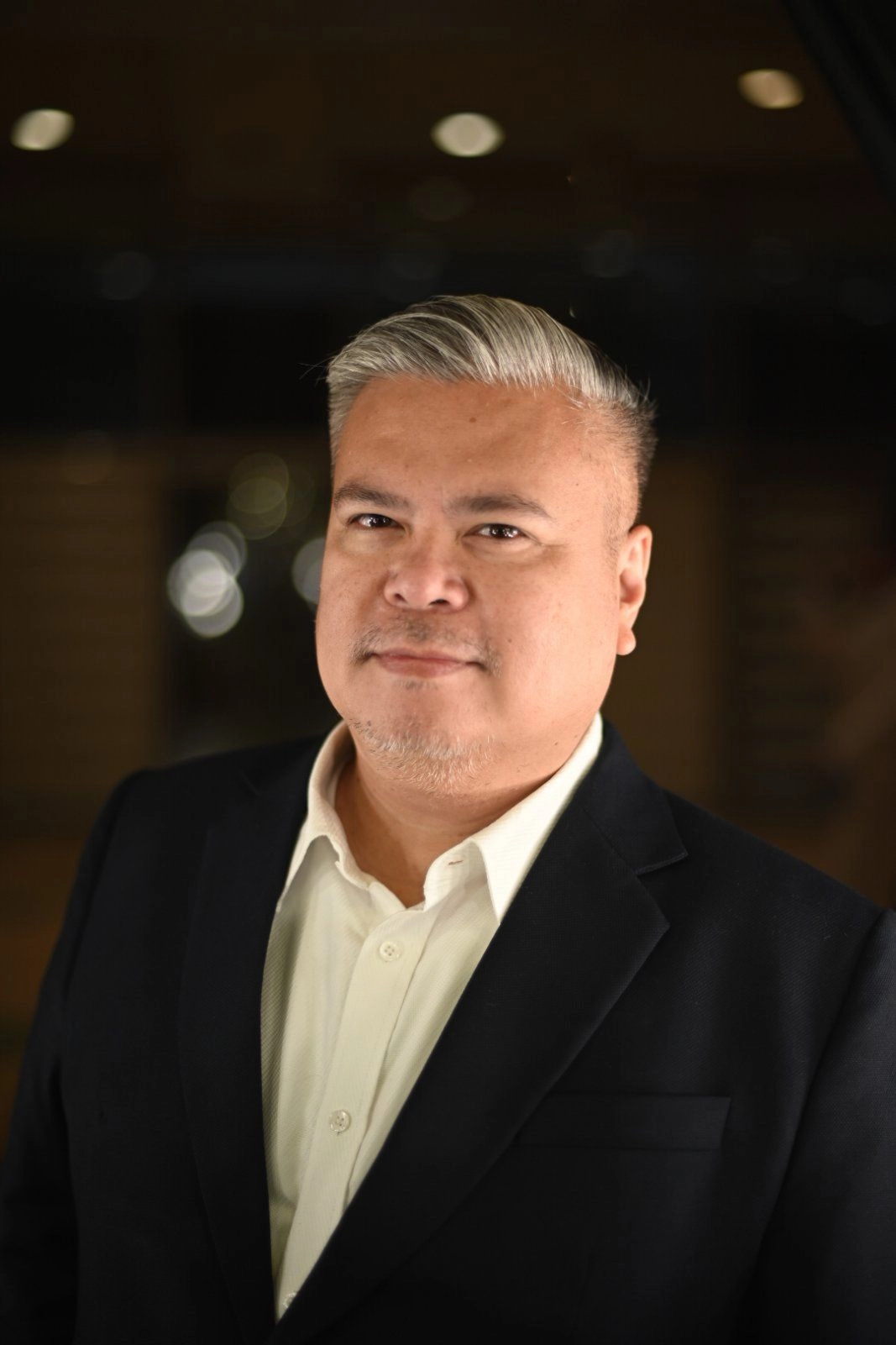
Javier P. Flores
A Juris Doctor from the University of the Philippines College of Law, he is a partner at the Flores & Ofrin Law Office, with expertise in corporation law, property, and litigation. Beyond the courtroom, Javi has made a name for himself as a publisher and editorial force. He is the co-owner of Milflores Publishing, a multi-awarded publishing house known for producing books that seek to elevate Filipino literature. He also founded League Magazine, a publication that spotlights the best governance practices of local leaders. Javi is also a two-time Master Photographer of the Camera Club of the Philippines. He was a former Associate Editor of the Philippine Collegian, the country’s oldest and longest-running student newspaper. Javi also served two terms on the Board of Editors for the Integrated Bar of the Philippines Law Journal.