News
Passing the Torch: The Vinzons Policy Center and the Next Generation

The Vinzons Policy Center ("VPC") was born from unease and restlessness. Senior Upsilonians watched the country lurch through a violent drug war, retreat from the full force of its hard-won West Philippine Sea ruling, and reopen old questions about military presence in UP. They began asking one another a blunt question: what can they do about it?
The group began taking shape from 2017 to 2019, during the first years of the Duterte administration. The drug war had dominated headlines amid allegations of police abuse and civilian deaths. The Philippines had also won its arbitral case over the West Philippine Sea, while the government pursued a more accommodating policy toward China. Within the University of the Philippines, another old issue, reminiscent of the First Quarter Storm, had returned: whether the military can enter the campus.
Jose Santiago “Pong” Ejercito ’74, who became involved while the group was still taking shape, remembers those years as a period of searching. “VPC was evolving as a group in the years 2017 to 2019,” he says. The brods who began talking among themselves came from different political and professional backgrounds. “The ‘concerned’ brods did not have an instant stand. They were a cross-section of brods with no defined ideology but of a mature age bracket, mainly batches in the ’70s and older.”
Their common ground was concern over the country and a desire to put decades of experience to work. “They were initially feeling their way, finding the time and opportunity to talk among themselves about what had been happening in the country and what they could do,” Pong recalls. VPC’s own account describes a country polarized over democracy, sovereignty, corruption, and truth, and a group of Upsilonians looking for a principled response.
The group soon found an issue on which it was prepared to act. VPC opposed giving the military unilateral authority to enter the UP campus without prior coordination with, or consent from, University authorities. The statement drew far more support than expected.
“The first dip into the water by VPC was to issue a public statement against allowing the military to enter the UP campus on its own decision,” Pong says. “It was a pleasant surprise that so many other brods — around 150 — signed on to that position.” He saw the response as proof that concern remained alive among the alumni. “It was a validation that there is residual concern despite seeming reticence all-around amid what was happening and that we could do something positive as a group, starting with brods as catalysts.”
Discussion led to organization, and organization began producing action.
Men who had already led
By the early 2020s, a core group had started meeting weekly or every other week through a Messenger chat they called “12 Angry Men.” (The name itself is almost certainly an allusion to Twelve Angry Men, Reginald Rose’s 1954 courtroom drama, later made into the famous 1957 film directed by Sidney Lumet. It centers on twelve jurors arguing intensely over a criminal case.) They discussed current events, identified larger policy questions, developed projects, and followed through on initiatives already underway.
The men around the table brought formidable experience. Jose Santiago “Pong” Ejercito ’74 brought decades of corporate leadership, including senior roles in Unilever in the Philippines and abroad. General Gregorio Pio Punzalan “Greg” Catapang Jr. ’84 had risen to the highest command of the Armed Forces of the Philippines as Chief of Staff and later returned to public service as Director General of the Bureau of Corrections. His career gave VPC the perspective of a soldier who had commanded at the national level, carried the burdens of public authority, and spent his professional life inside institutions where discipline, constitutional command, and decisive leadership carried immediate consequences.
Segundo Joaquin Eclar “Doy” Romero ’68 supplied much of the intellectual framework. A political scientist and scholar of governance and public policy, Doy became, in Pong’s words, the group’s “spiritual leader.” His academic discipline helped guide VPC’s discussions, while his journalistic instincts helped turn collective thought into public statements.
Ricardo “Ricky” Guevara ’75 brought decades of business and entrepreneurial experience. Danilo A. “Danny” Gozo ’67, a veteran journalist and communications executive, had served as Press Undersecretary under President Corazon C. Aquino, placing him inside Malacañang during the restoration of democratic government after EDSA. Roberto N. “Robbie” Tañada ’76 brought extensive experience in government relations and major infrastructure, while Teodoro Zialcita “Buddy” Zaballero ’75 formed part of the senior core that sustained the effort.
Many others fed their own expertise into VPC’s work: Jev Ramos ’75 on advertising, communications and branding; Doddie Delfin ’78 on graphic design; Bong Uichanco ’81 on information technology and expanding VPC’s digital reach; Dondi Alikpala ’81 on public statements and policy forums; and lawyer Mike Ureta ’84 on drafting public positions. Senior collaborators Dick Malay ’62, Chibu Lagman ’63 and Tony Gloria ’65 have since passed on. Chibu, a professor of Latin American studies in Canada who also had experience implementing Masagana 99, brought a comparative view of politics, government, and popular action.
Their experience gave VPC weight and range. Corporate management, military command, government, political science, communications, infrastructure, law, technology and entrepreneurship all entered the same conversation.
A younger group followed, aside from this author, there were Juan Lorenzo “Jorenz” Tañada ’92, John Paulo “JP” Delas Nieves ’13, JC Tejano, Dexter Yang, and Mark Gio Olivar ’20, several of them former student leaders. Their entry widened the Center's generational span and brought the question of succession squarely into view.
The Center came to describe itself as a “think-and-do space for principled public policy engagement.” Its method joins analysis with action: study the issue, bring the right people into the room, subject positions to argument and evidence, and then act where principle requires it.
Why Vinzons?
Pong does not recall exactly when the group formally adopted the name Vinzons Policy Center. Wenceslao “Bintao” Vinzons nevertheless presented an obvious model.
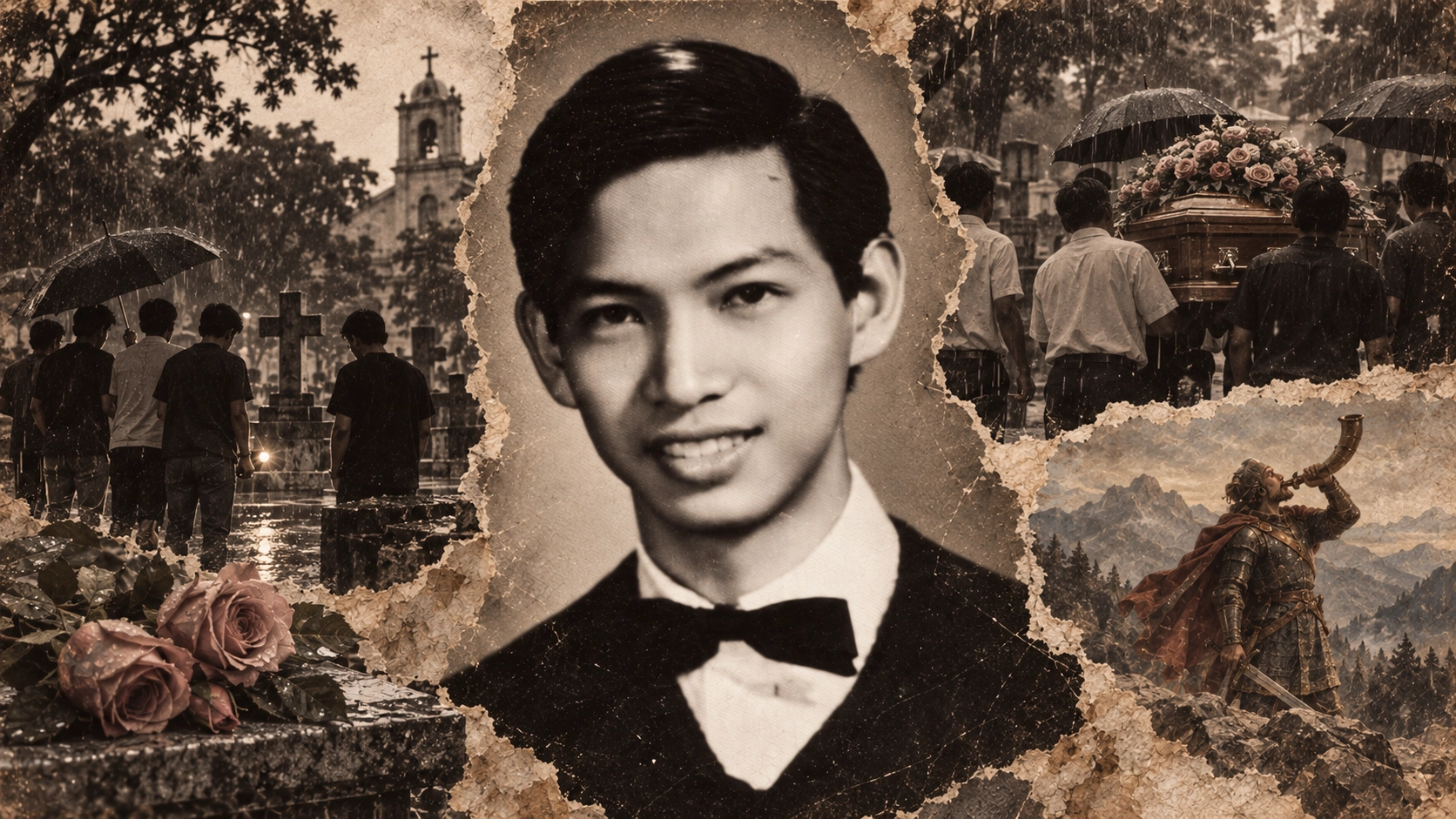
“Vinzons was a dynamic, visionary leader of his time,” Pong says. “He stood for patriotism, excellence, integrity, social responsibility and genuine service to the nation, all qualities sorely needed in the present time.” He also represented something central to both Upsilon and UP. “He also epitomized outstanding student leadership aside from public leadership.”
Vinzons built that reputation early. He emerged from Camarines Norte to become one of the strongest student leaders and orators of his generation at UP. He founded Young Philippines, entered the Constitutional Convention at 24, became governor at 27, and congressman at 29. During the Japanese occupation, he organized armed resistance in Bicol and refused collaboration after his capture. His defiance cost him his life and the lives of members of his family.
VPC adopted Vinzons as a standard for leadership. Its formal vision now condenses that standard into three propositions: Inclusive Security — All Lives Matter; Inclusive Development — All Dreams Beckon; Inclusive Governance — All Voices Count.
Pong sees those principles as an extension of Upsilon itself. The initiatives of VPC, he says, “put flesh into the Upsilon ideals” embodied in the Credo and the Concept of Brotherhood. The Center seeks to enable, empower, and encourage brods to serve the nation and their fellow Filipinos, while extending that effort beyond the fraternity by helping develop leaders for the country.
That gives VPC a wider purpose. Its work begins inside Upsilon, but its field is the nation.
From talk to policy
The COVID-19 pandemic moved much of public life online and gave VPC an effective platform for wider engagement. Its first public forum dealt with COVID-19 and the national response, with Dr. Anthony Leachon as speaker. VPC then moved into strategic issues with direct consequences for the country’s future.
One forum tackled energy security and the decline of the Malampaya gas reserves. VPC brought together former Shell Philippines chairman Edgar Chua and economist Winnie Monsod, with Mannix Manalo ’87 and Dondi Alikpala ’81 participating as interactors. The discussion examined the sources that would have to sustain the country as Malampaya declined.
VPC also devoted serious attention to election reform. Following complaints about the conduct and fairness of the 2022 elections, it organized two public forums bringing election administrators, watchdog organizations, critics, and specialists into the same discussion.
One forum brought together COMELEC Chairman George Garcia, representatives of LENTE and PPCRV, and election experts Eli Rio and Gus Lagman. Doy Romero and Aminah Rasul-Bernardo jointly moderated the discussion, while UP Diliman Chancellor Edgardo Carlo Vistan, himself a former election lawyer, gave his reaction. VPC conducted the forum with the UP Alumni Association, continuing a partnership that widened the Center’s reach beyond fraternity circles.
VPC applied the same approach to agriculture and food security, bringing in former Senator Francis “Kiko” Pangilinan together with agricultural experts to discuss how the Philippines could secure its food supply. Public health, energy, elections, and agriculture all led back to the same question: whether the Philippines possesses the institutions, policies, and leadership required to secure its future.
The long view
Pong identifies another weakness that VPC wants to confront: the country’s habit of planning in six-year political cycles.
“One of the shortcomings of national governance that has prevented us from achieving steady uninterrupted progress is the tendency to plan and execute within each administration’s term,” he says. Philippines 2040, in his view, offers a way to change that mindset by forcing leaders to think beyond the disruption of successive presidential terms.
That idea now drives VPC toward the young.
A country cannot build for 2040 if every generation starts again from zero. Institutions need memory. Leadership needs continuity. The knowledge accumulated by men who have already run corporations, commanded troops, advised presidents, built infrastructure and studied government must reach the men who will occupy those positions decades from now.
VPC therefore wants younger leaders to confront national problems early, study them seriously, and prepare themselves while they still have time to form their judgment. The objective reaches beyond Upsilon. The Center’s leadership program expressly seeks to develop leaders both within and outside the fraternity for the benefit of the country.
November 28: passing the torch
That effort takes concrete form on Saturday, November 28, 2026, when the Vinzons Policy Center convenes the 2026 Vinzons Leadership Forum at the University of the Philippines Bonifacio Global City. Registration and fellowship begin at 8:30 a.m., with the formal program starting at 9:00 a.m.
The morning brings together men who have spent decades thinking about leadership and the Philippines. UP Diliman Chancellor Edgardo Carlo Vistan will speak on the University and the formation of future leaders. Christian Monsod, constitutionalist and former COMELEC Chairman, will examine Upsilon’s century-long quest for transformative leadership. Veteran journalist Vergel Santos will confront the historical and contemporary failures of Philippine leadership. Former UP President and former Trade Secretary Alfredo Pascual will address the Philippine economy and the well-being of Filipinos.
The afternoon places the burden on the younger participants. Under Doy Romero and a team of younger facilitators, they will examine the Philippines they are likely to inherit and the Philippines they intend to create. By 2040, many will already be leading businesses, professions, institutions, communities, and perhaps government. VPC wants them thinking now about the decisions they will someday have the power to make.
The workshop demands more than prediction. It asks the participants to understand reality, imagine a preferred future, work through competing ideas, and translate vision into action. Those four ideas form the program’s philosophy: understanding reality, imagination, collective intelligence, and action.
The day ends where leadership finally becomes personal. Each participant must confront three questions: what kind of leaders will the Philippines need, how must he prepare himself for those challenges, and what social and civic responsibility comes with being an Upsilonian and a UP graduate?
The forum closes with Greg Catapang, whose own career carried him from the military academy to command of the entire Armed Forces and back into difficult public service. His presence gives the final moment an appropriate weight: leadership tested in real institutions, now speaking to men whose tests still lie ahead.
Vinzons remains the model. He led as a student, entered constitutional politics in his twenties, became governor and congressman while still young, and treated service to country as a duty that demanded sacrifice. Doy Romero captures the lesson in one line: “youth is not preparation but power.”
Pong gives the standard in equally direct terms: “patriotism, excellence, integrity, social responsibility and genuine service to the nation.” The men who built VPC now intend to pass those standards forward, together with the lessons of lives already spent in leadership.
The torch changes hands on November 28.
About the Author
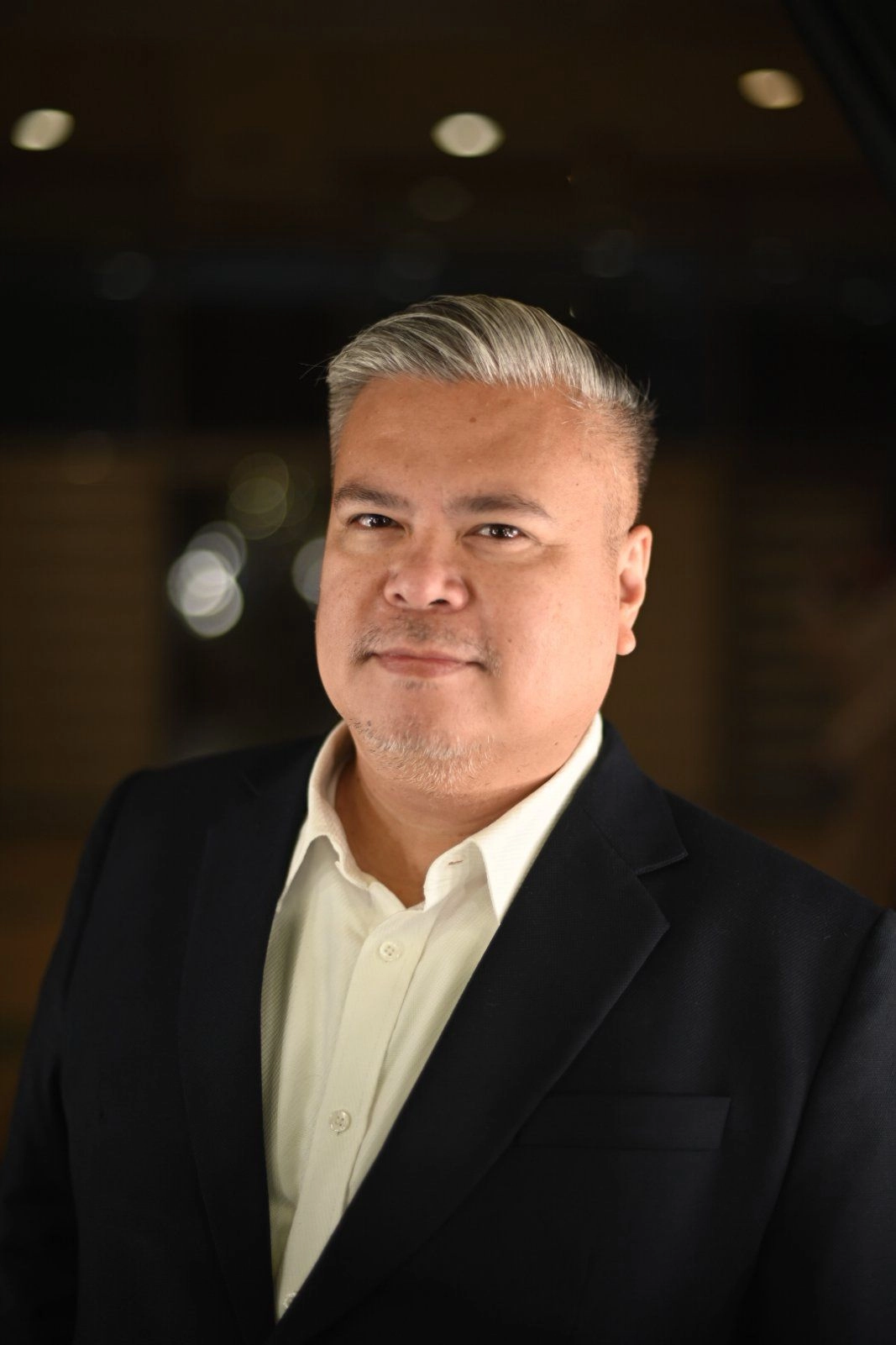
Javier P. Flores
A Juris Doctor from the University of the Philippines College of Law, he is a partner at the Flores & Ofrin Law Office, with expertise in corporation law, property, and litigation. Beyond the courtroom, Javi has made a name for himself as a publisher and editorial force. He is the co-owner of Milflores Publishing, a multi-awarded publishing house known for producing books that seek to elevate Filipino literature. He also founded League Magazine, a publication that spotlights the best governance practices of local leaders. Javi is also a two-time Master Photographer of the Camera Club of the Philippines. He was a former Associate Editor of the Philippine Collegian, the country’s oldest and longest-running student newspaper. Javi also served two terms on the Board of Editors for the Integrated Bar of the Philippines Law Journal.