Alumni
Why Upsilon Cares
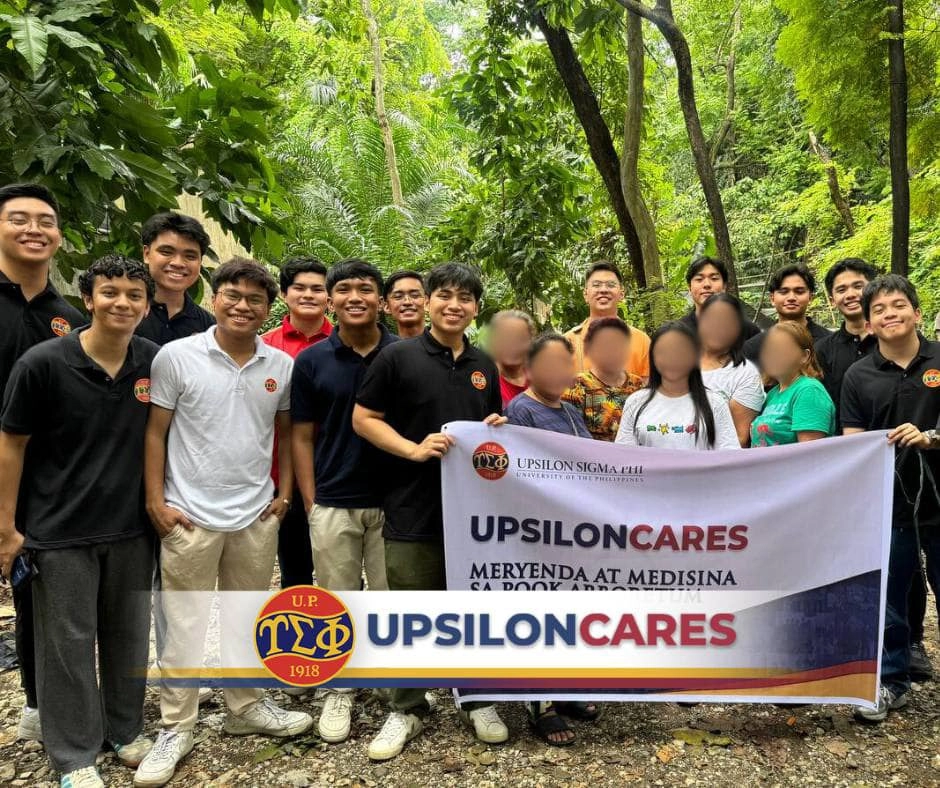
When people think about fraternity service projects, it is easy to assume that such initiatives exist primarily for publicity, compliance, or institutional image-building.
Like many brods who were still learning then, I once held the same assumption.
But over the past two years, participating in and organizing more than twenty installments of Upsilon Cares gradually changed that perspective. What changed my mind was not a slogan, nor a well-written caption, nor even the number of people reached after each installment. It was immersion. It was being brought, again and again, into places where a fraternity was not expected, where the idea of service was no longer just an idea, but a discipline.
Since its first installment, Upsilon Cares has undergone several transformations. Each Illustrious Fellow brought its own vision. Each Fellowship Council introduced different approaches to leadership and management. Yet having served under three IFs who implemented the project, I can confidently say that while the structure evolved, the spirit remained constant.
Upsilon Cares did not change in purpose. Only in form.
That is what I now see most clearly when I look back on it. Beneath the different themes, different councils, and different modes of implementation, the project kept returning to the same question: what does it mean for fraternity to move beyond itself? What does it mean for brotherhood to become visible not only in how brods treat one another, but in how they learn to stand beside people whom they did not previously know, whose burdens they did not previously carry, and whose realities they may never have encountered had they stayed within the ordinary comforts of campus life?
Bam Manahan 2020: Service as Doctrine
In February 2024, the Fellow Orators assigned my batchmates to organize a soup kitchen within the UP campus. At the time, I was attending the General Assembly of Student Councils in Miag-ao, Iloilo while simultaneously preparing our proposal. Eventually, we presented the project to the Illustrious Fellow at the time, Bam Manahan 2020.
During the presentation, I repeatedly framed the initiative in terms of publicity and image-building. I spoke about how the project could improve the fraternity’s public perception.
Afterward, then IF Manahan offered a simple but important reminder. The purpose of the project, he said, was not publicity. It was meant to create an opportunity for brods to carry out the Imperative to serve. That moment clarified the direction of the project.
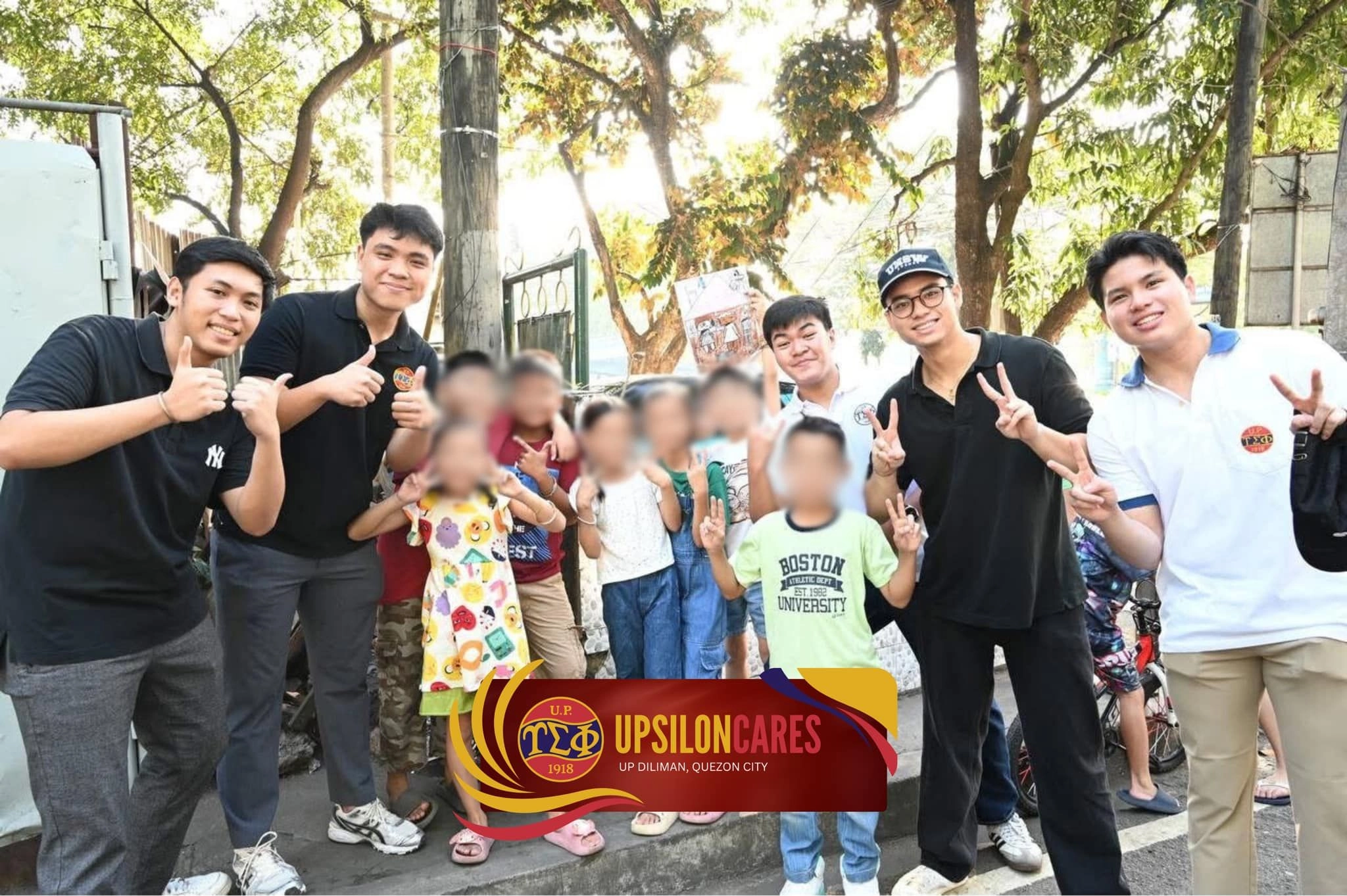
I only understood it in hindsight, much later, when the work began. The first installment was launched in Daang Tubo in February 2024 as a monthly soup kitchen under Upsilon Cares. From the outside, that can sound small: lugaw, toys, children, a community visit. But being there changes the scale of the act. A place stops being a name in a proposal and becomes a place with faces, voices, rhythms, and needs. Service ceases to be an organizational category and becomes a human obligation.
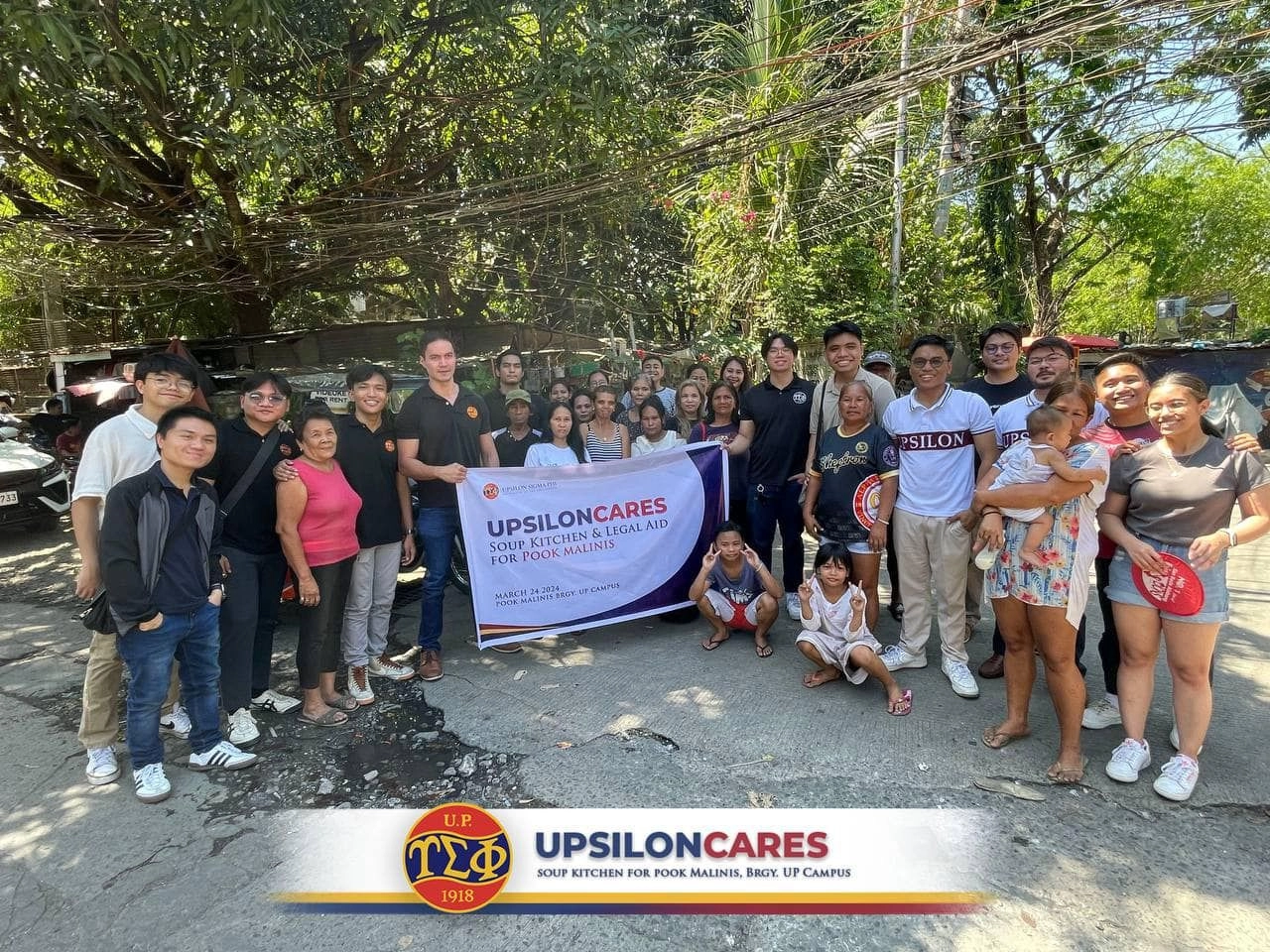
That was the beginning of immersion for many of us. The UP campus alone contains communities that many students pass by without really entering. Under IF Bam’s leadership, the fraternity conducted early installments in Pook Daang Tubo, Pook Malinis, and PGH. Those places were different from one another, and because they were different, they taught us different things. In one place, you had to learn how to feed people with dignity. In another, you had to coordinate legal assistance and community partners. In another, you had to enter a hospital not as a spectator, but as someone carrying small necessities for patients already exhausted by waiting, heat, illness, and uncertainty.
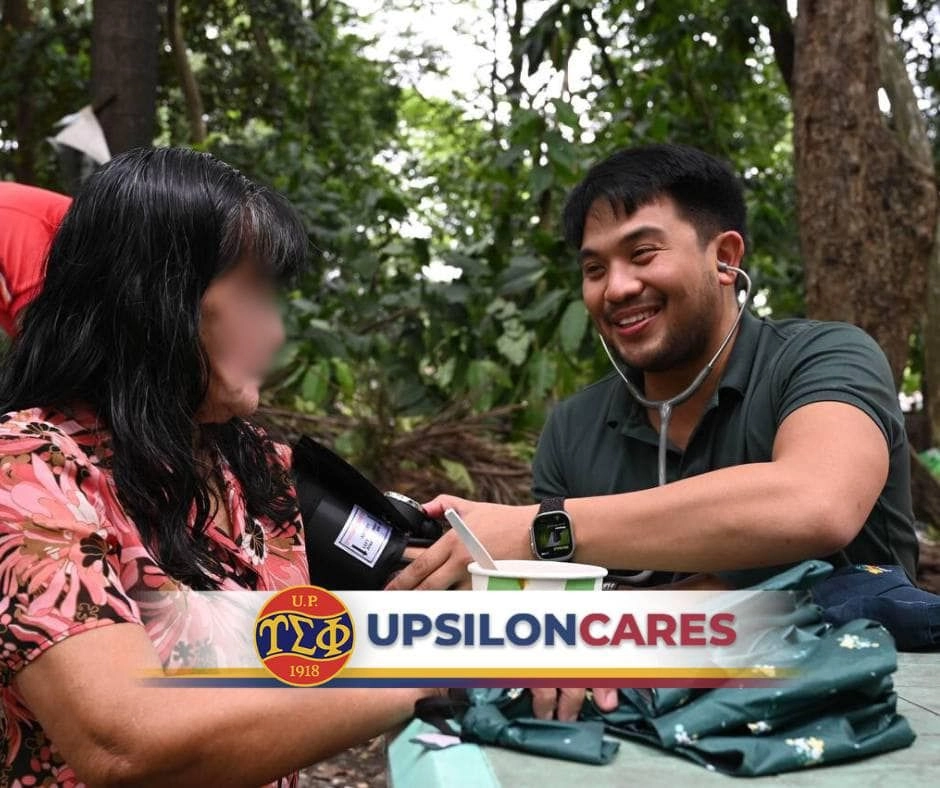
The PGH installment stays with me for that reason. On paper, it involved distributing alcohol sprays, face masks, wet wipes, food, beverages, and pamphlets to outpatients. But that description does not quite capture what it means to stand in a place like PGH and encounter people whose day has already been lengthened by sickness, cost, and worry. In those moments, what we carried were ordinary things. But ordinary things look different when handed to someone already carrying more than enough.
Under IF Bam’s leadership, the fraternity learned a foundational lesson: that service is not merely an outward gesture. It is a way of correcting the self. It asks brods to stop imagining service as performance and begin receiving it as formation. Under Bam Manahan, Upsilon Cares was defined by a simple idea: we serve because we are Upsilonians
.
Franz Legazpi 2018: Service as Mission
During the turnover of Nang Franz Legazpi 2018, whose theme centered on “Upsilonians for the Community, the Nation, and the World,” he emphasized that the fraternity should serve as an incubator for brods who wished to pursue meaningful projects.
At the time, I had just assumed my first Fellowship Council role as Fellow Orator. Implementing Upsilon Cares now fell directly under my responsibility. His words served as a marching order.
During his term, the project widened in scope and became more regular in pace. We institutionalized the program and set a goal of conducting at least one installment every month.
In practice, that meant immersion could no longer be occasional. It had to become habitual. Brods could not simply enter one community, hold one event, and return to the old routines unchanged. The project kept bringing us outward. And because it kept bringing us outward, it kept enlarging what fraternity asked of us.
Many brods discovered aspects of the UP community they had never encountered before. Some saw the farmlands in Pook Arboretum and Pook Aguinaldo for the first time. Others interacted with farmers, workers, and informal settlers whose lives intersect with the university in ways often invisible to its students.
These experiences reshape perspectives.
That line is easy to write. It is harder to explain. What I mean is this: once you have walked into places you previously knew only by name, once you have spoken with people whose labor quietly sustains the university you move through every day, once you have knocked on doors to borrow kitchens for a community meal or stood in wet markets helping source what will later be cooked and served, it becomes more difficult to return to the illusion that UP is only the classroom, the org tambayan, the canteen, or the corridor between them.
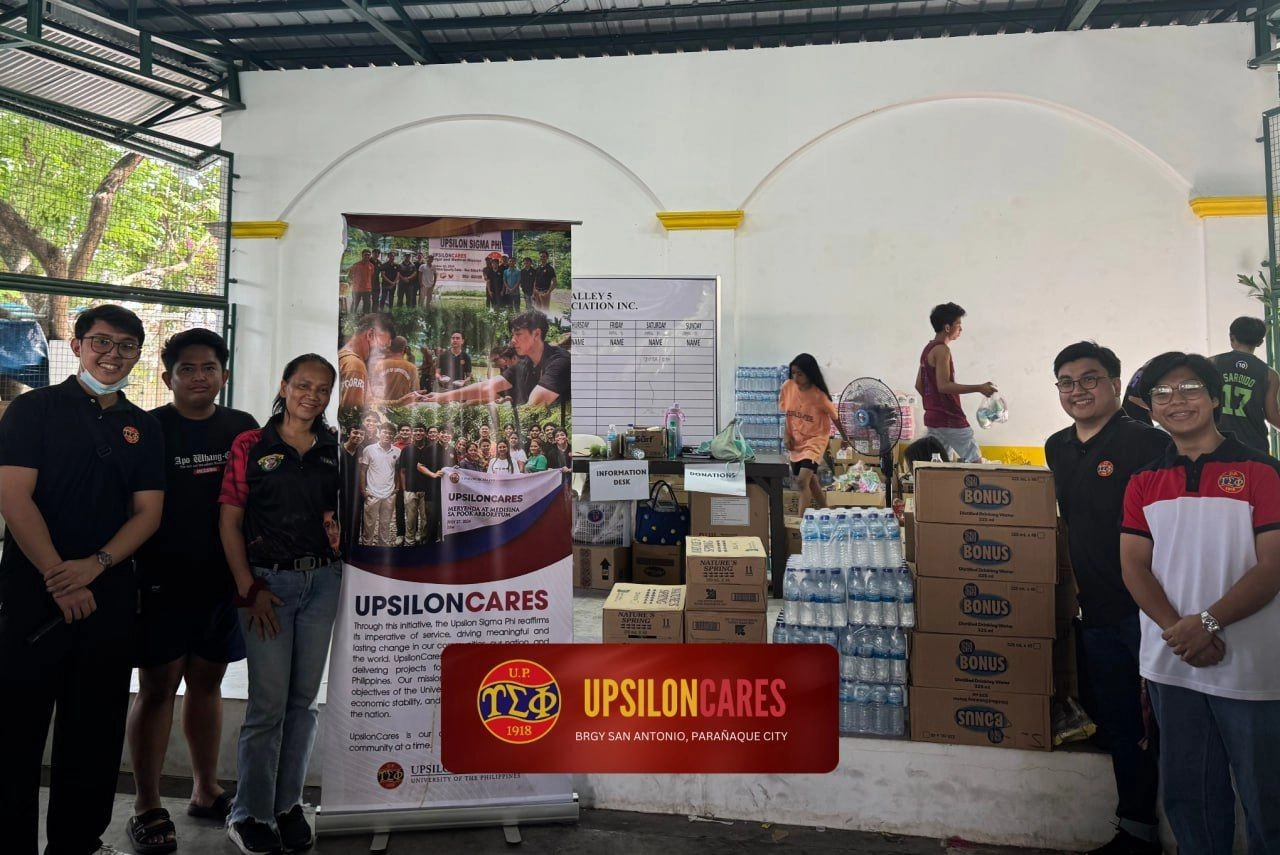
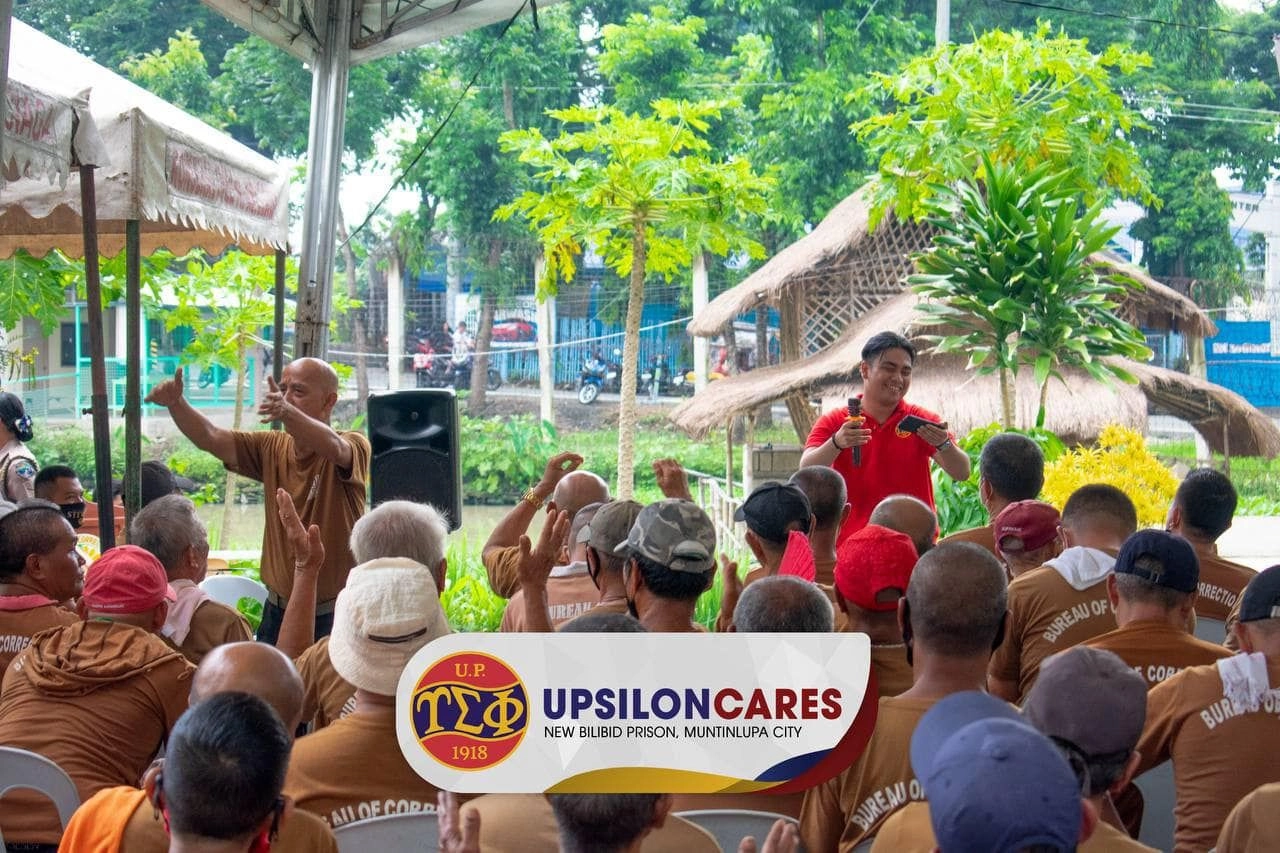
By the end of 2024, the public record of Upsilon Cares had begun to show this widening pattern. There were installments in Pook Malinis, Baseco, PGH, and Pook Arboretum. There was a mission in New Bilibid Prison, where fellows prepared 500 hot meals for elderly residents and offered legal and medical assistance to persons deprived of liberty. There were relief efforts during Typhoon Carina for dormitory residents, jeepney drivers, guards, and staff inside UP Diliman. What ties these together is not that they all look alike. It is that they all require brods to leave familiar ground and encounter the country in forms they might otherwise never have gone to.
The New Bilibid installment, especially, says something important about what the project had become. A fraternity easily risks becoming enclosed within its own self-understanding. But when brods find themselves preparing meals in a prison environment, or offering legal and medical assistance in a place most people prefer not to see too closely, then service ceases to be ornamental. It becomes a way of crossing into difficult realities without turning away.
By the end of IF Franz’s term, the fraternity had conducted twenty installments of Upsilon Cares, mobilizing around ₱200,000 in resources and reaching more than 3,500 beneficiaries.
Those numbers matter, and the public record bears them out. But what mattered more, at least to me, was what began to happen to the brods themselves. The project had become a recurring invitation to look longer, go farther, and stay present where one might otherwise retreat into abstraction. Under Franz Legazpi, Upsilon Cares became more than a project—it became a mission to draw brods into communities until those communities were no longer peripheral to how they understood service, country, or fraternity.
Service as Formation
The project continued to evolve under the new Illustrious Fellow’s term, whose theme emphasized the forging of “Crystallized Upsilonians.”
One of the most notable innovations during his term was integrating Upsilon Cares directly into the formation of newly inducted brods.
When I later served as Fellow Custodian and Senior Noble Fellow, his directive was clear: the project should form part of a brod’s integration into the fraternity.
Instead of a traditional service mission given by the IF on the last day of initiations, newly inducted brods would design and implement their own Upsilon Cares installment during their two-week integration period.
The purpose was simple. Within their first month in the fraternity, new brods would already have the opportunity to contribute to the community through service.
I think this was one of the most important transformations the project underwent. Before, immersion might still have been something a brod encountered later, after he had already settled into the internal life of the fraternity. Under this model, immersion was brought much closer to the beginning. It became part of the entry. Part of becoming. A brod was no longer only being told what fraternity valued; he was being asked to enact those values in the world almost immediately.
That change matters because service is not absorbed the same way a doctrine is memorized. It is absorbed differently when one has to plan an installment, coordinate with a community, improvise when things fall through, and show up in a place where people are not interested in fraternity rhetoric but do care whether you came prepared, whether you returned, and whether you treated them seriously.
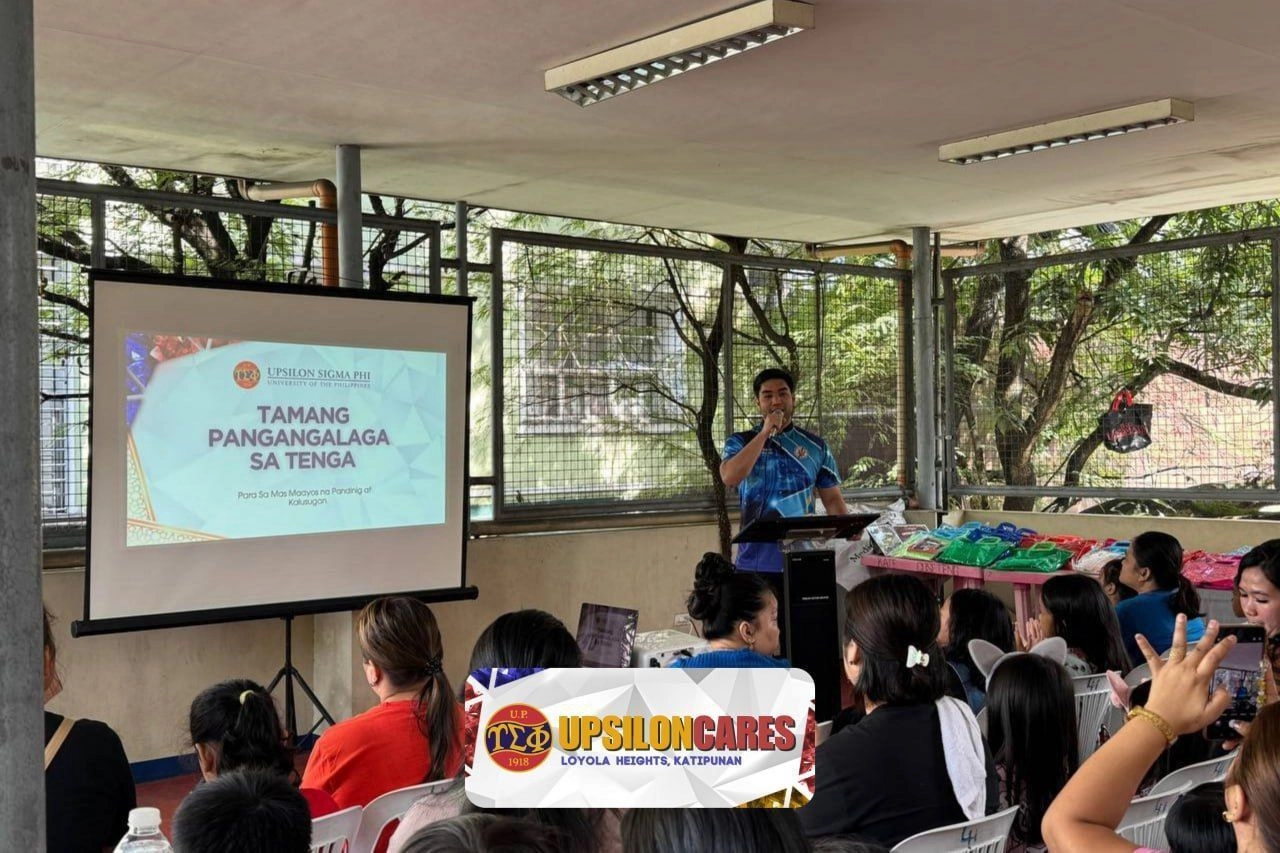
By 2025, that outward motion remained visible. The first Upsilon Cares installment of the year was held in Pook Ricarte, where fellows prepared spaghetti for 100 children and distributed toys, medicine, and school supplies, while volunteers led games and discussions on waste segregation and environmental awareness. In March 2025, the project also reached Sitio Pulot in Barangay San Antonio, Kalayaan, Laguna, through a medical mission in partnership with the local Rural Health Unit. These were not identical activities, nor should they have been. What united them was that brods were again being placed inside communities, asked to work with others, and made to understand service not as a fixed format but as attentiveness to actual need.
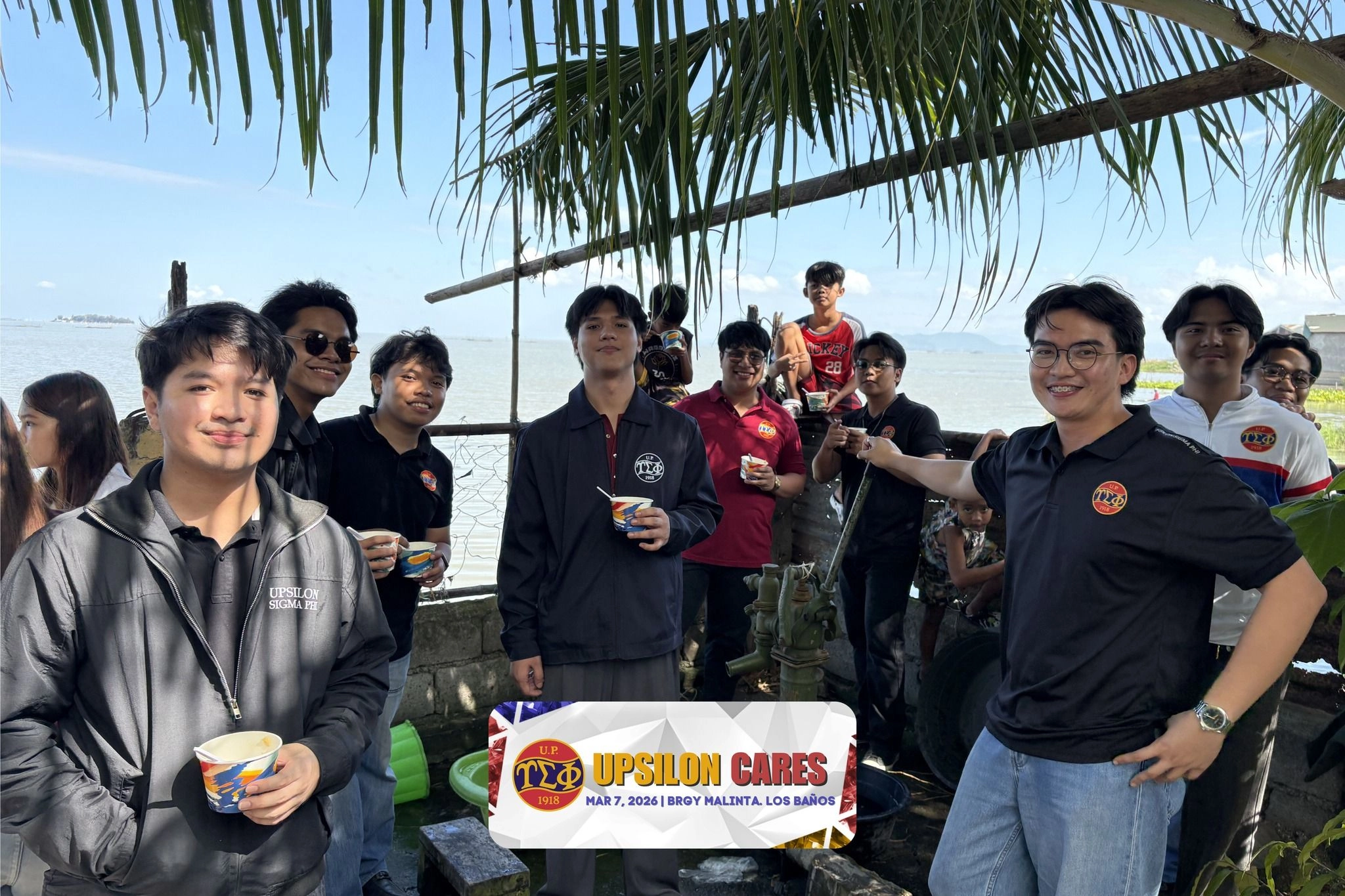
Even in 2026, that pattern continued. Public traces show another Upsilon Cares soup kitchen in Los Baños in March 2026. That continuity matters. It shows that immersion was not a passing enthusiasm tied to one launch, one batch, or one council. It had become a recurring expression of what the fraternity expected from itself.
Under the IF’s term, Upsilon Cares became an extension of a brod’s formation.
Why It Matters
Having participated in more than twenty installments of Upsilon Cares, I have come to understand its deeper significance.
For many brods, these projects represent encounters with realities far removed from the everyday life of a university student. Some brods have stepped into wet markets for the first time through these activities. Others have knocked on the doors of urban poor communities to request the use of kitchens for community meals. Still others have met farmers within the UP campus who continue to defend their lands from displacement.
These experiences reshape perspectives.
But more than that, they test whether the doctrines of the fraternity can survive contact with reality. It is easy to speak of service as an ideal. It is harder to wake up early for it, fundraise for it, prepare food for it, carry supplies for it, coordinate around it, and keep returning to it after the first glow of novelty has worn off. Upsilon Cares matters because it does not let service remain rhetorical. It asks whether a brod can still believe in fraternity once brotherhood is required to take the form of labor, patience, humility, and contact with lives unlike his own.
That is why the immersion matters so much. It is not incidental to the project. It is the project’s deepest gift. To be immersed is to be displaced from the center of one’s own assumptions. It is to realize that fraternity cannot remain only a bond among the fortunate, the articulate, the initiated, or the already convinced. It must also become a way of entering the lives of others without condescension, of learning to listen before acting, and of serving without needing to be seen as the author of someone else’s relief.
While Upsilon Cares began as a service initiative, it eventually became something more. It became a means of reconnecting the fraternity with the communities around it. It became a vehicle for partnerships across the university. And most importantly, it became a reminder that the doctrines of the fraternity are meant to be lived—not merely recited.
Ultimately, the value of Upsilon Cares does not lie in publicity or recognition. It lies in the lessons brods carry with them long after each installment ends. It lies in the slow shaping of character that occurs when service ceases to be a special occasion and becomes part of how one learns to move through the world.
Two years since its inception, the message remains simple.
Upsilon still cares.
And perhaps more importantly, Upsilon continues to prove that it does.
About the Author
Lucas Buenaflor
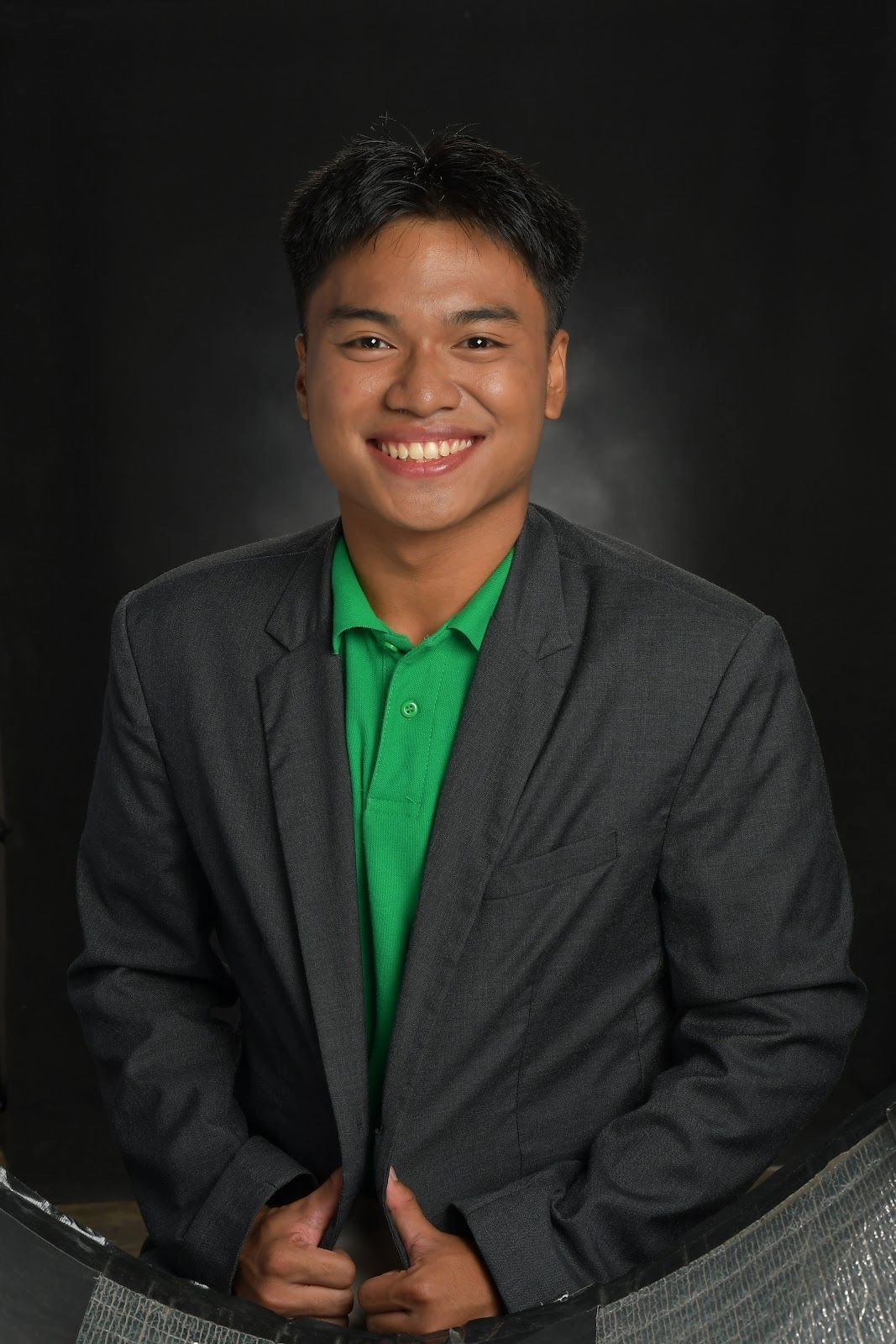
Juan Lucas Antonio Buenaflor 2023 is a student leader, having served in the UP School of Economics Student Council and as Chairperson of the University Freshie Council. At UP, he co-convened BUILD UP 2024 and held key roles in Diliman Games, the University Job Fair, Econ Week, and the National Youth Congress. As Fellow Orator, he leads the fraternity’s Special Projects Committee and spearheaded UpsilonCares - the residents’ flagship service program. Beyond UP, he is the President of Kilos Ko Youth and a Political Officer for Senator Francis N. Pangilinan ’81. He previously interned at the UNESCO Philippine National Commission under Secretary-General Ivan Henares ‘98. Before entering UP, he worked as an Account Executive Intern at BCD Pinpoint Direct Marketing, handling key accounts like UNICEF Philippines and DAVIES Philippines. An alumnus of the Kaya Natin! Movement and the Council of Asian Liberals and Democrats, he is also a recipient of the Gerry Roxas ‘46 Leadership Award. He is currently a second-year BS Economics student at the UP School of Economics.